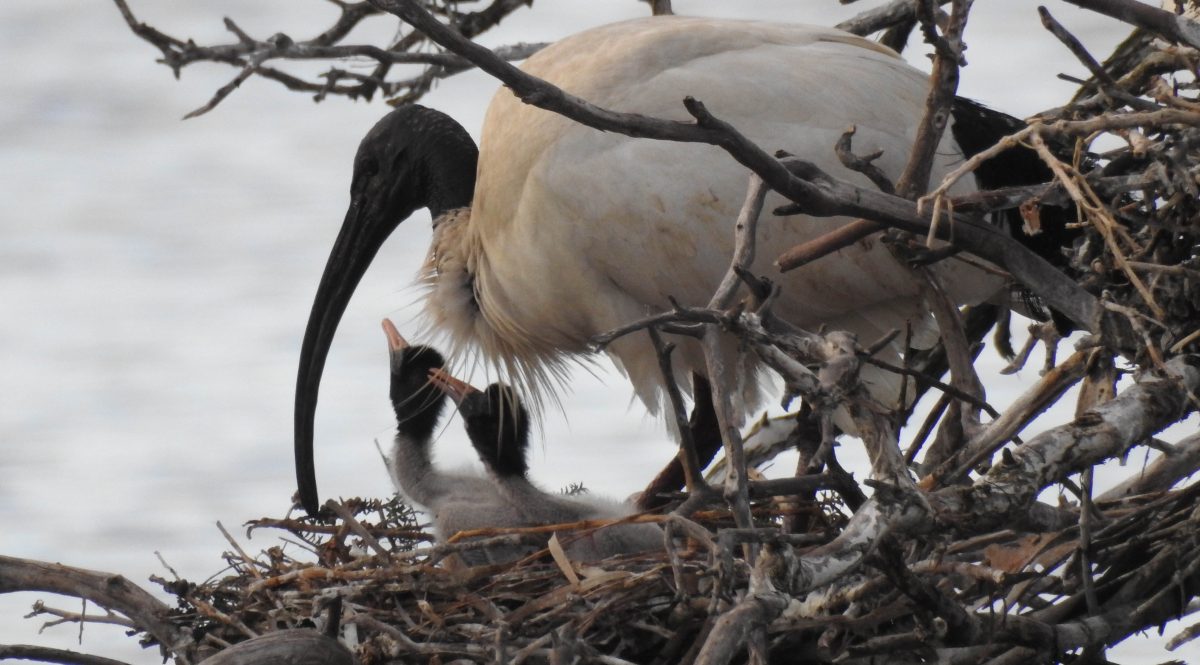
Much like cyberspace, early morning in Big Swamp is noisy. It is filled with tweets and squawks.
During my recent trip I found the air was filled with the high pitched squeaks of honeyeaters, the melodic songs of the Willy Wagtails, and the pained cry of the swamp hens as I approached. The musk duck was being chased by another, the paddle speed of webbed feet on water, fast and furious.
I slowed my pace as I approached the boardwalk. It is the intention, that slowing down of body and mind, that brings me here each time. I know the Welcome Swallows love sitting on the rails, facing the sun. Sometimes they get used to my presence and accommodate my curiosity. I’ve learned to extend the lens only when they look away, as movement is always a signal for flight.
 To my surprise I found some Swallows on the ground near my feet.
  Fear set aside, they were busy with nest building, focused on task.
 A slight movement from the corner of my eye caught my attention, a fairy blue wren darting and hopping among the foliage. No matter how many times I see them, the flash of blue always makes my heart skip a beat.
  The male wren stood still for a moment. So perfect. It looked like an enamelled ornament, with blues upon blues found in sky and sea.
 In contrast, the female’s beauty, is subtle. Perhaps this is nature’s intention.
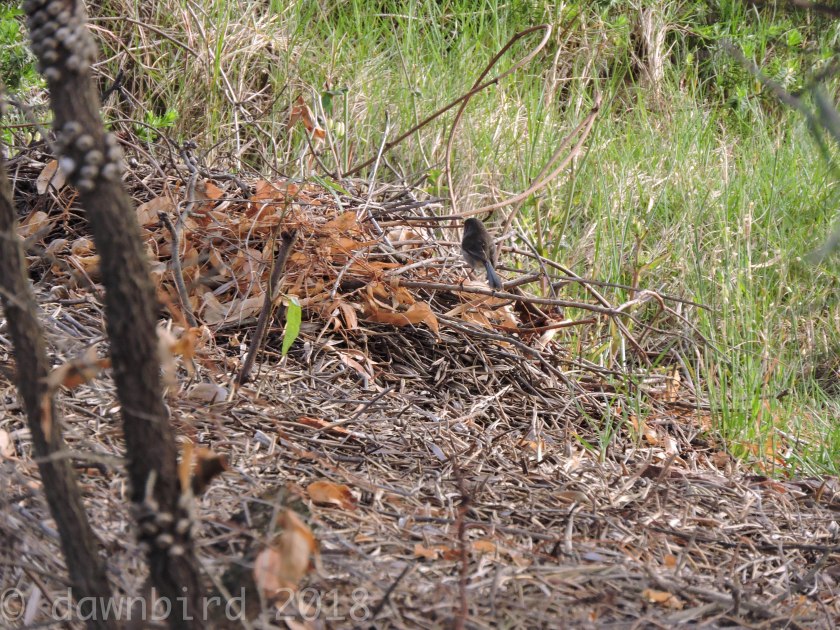 While the male distracts she tends to her family, almost invisible, among debris.
Distraction is a powerful tool. These tiny little creatures know this instinctively. They use it for survival.
People in power know this too.
As I read today’s news headlines, I wonder …
Do we?
Until next time
As always
a dawn bird
 At the base of the massive boab tree was the tiny chick she so desperately tried to protect. If you look closely you can barely see it at the juncture of the base and the longest root that extends from it (to the left of the screen).
 So young, it still had feathers on the crown and eyes that were barely open. In a park where dogs and children played with careless abandon, the vulnerability of the chick, fired my up protective instinct too.
 The chick relaxed and stared at me with curiosity.
 The mother did the same, no longer flapping her wings furiously. She flew away time and again, returning with a morsel each time. She fed her chick with utmost patience.
 I stood guard until the park was nearly empty. The protective instinct of the mother was memorable. No longer anxious, the mother and chick relaxed into their respective roles of nurturer and one being nurtured. The impact of trauma on a developing brain is well documented, especially for learning, emotional regulation and attachment issues. It came together for me in one fleeting moment.
 A Shared Space
You must be logged in to post a comment.