Narratives

DSC_0919.jpg

The tradition of narrative goes back thousands of years.  People have told the story of their times in art, symbols and in words.

‘Architectural’, ‘organic’ are buzzwords that describe shape, and are appropriate descriptions of this sea artwork too. For me, this art of nature is also a book.  With embedded shells and barnacles, on every inch is etched a story from long ago.  It has been a silent witness to the ebb and flow of tides and the ferocity of tropical storms that come and go, but for how long, is something I do not know. It lies on the beach, offering a seat to the sea, shorebirds and people. It is beautiful. It is immoveable. It is tactile. It is a tangible reminder of life, in its many forms. I visit this rock every time I visit Cable Beach, Broome. It has never looked as beautiful as it was the first time I saw it, yet my pulse quickens and my gaze softens every time I cast my eyes on it.  If you have ever fallen in love, you would know this feeling.

A pilgrimage here is a must for me whenever I visit Broome.  It is a point of reference. I have experienced child-like joy on this beach. I have experienced renewal.  Trust.  Friendship.  Disappointment. Uncertainty.  Some visits also made me incredibly pensive. But, without exception, my visits cemented my resolve to be more human.

I have photographed this platform many, many times, erroneously thinking, it is going to give me more than it already does. It is an old friend sharing its wisdom, without judgment. It encourages me to stop and think. Time, like life, is precious, and, also like love, it is infinite. The only parameters placed on both, are the ones we impose, usually through fear and sometimes, memory. When I look at this rock structure, defined it may be in shape, but it has no parameters. It is open to all experiences. The very essence of this makes it vulnerable to the elements.  Yet, it also has a strength that draws me to it repeatedly.  I am drawn to people like this too.  Vulnerable people who, in my eyes, are also strong.  Some would describe me in the same way.

After some intense searching, I found the format for living and, some years ago, I chose to live life this way.  Open to new experiences, receptive to challenges, vulnerable.  It was my definition of living life on my terms.  Conventional it may not be for some, but it is my choice to do it my way.  I have few ties but they are secure.  They anchor me when the wind gusts are strong. At other times, I float freely with a gentle tug every now and then that reminds me I am tethered, if I need to be.

I’m determined to find time in my schedule to visit this rock some time soon. And, when I do, I’ll leave some part of my life story with it, too.

Until then,

As always,

a dawn bird


The Pacific Gull


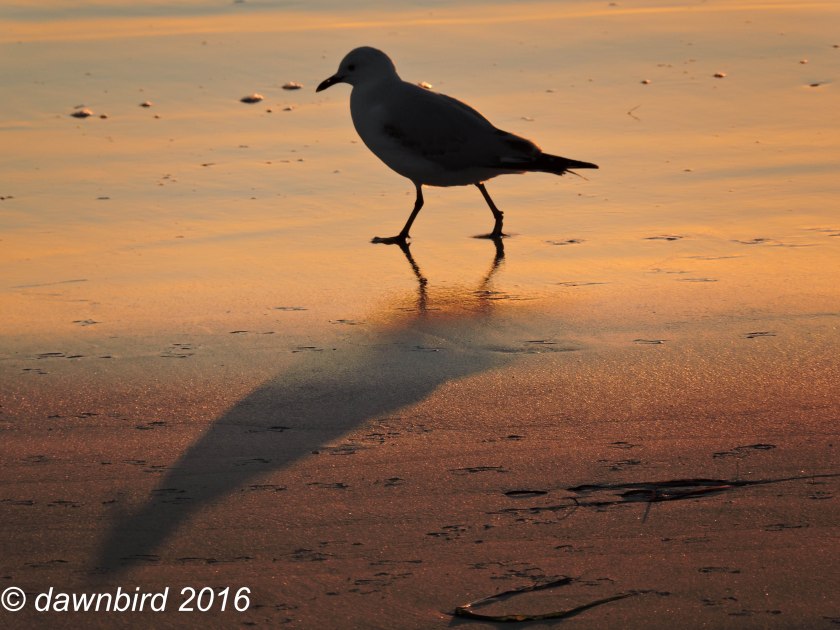
As part of my self-care I look for things to nourish my spirit every day.  In Esperance, this is not difficult to do.  A few steps, across the road from my hotel, I stop at a secluded area along the shoreline where the seagulls and Pacific Gulls were waking.  On approach I’m surprised to see how big the latter birds are, in comparison to the sleek silver seagulls.

With me for an audience one Gull saunters off into the Bay with an easy step.  Delight wreaths my face with a smile but there’s more to come.  One backward glance at me and it’s cue show time.

He swims out and turns around to face me.  He flicks his wings and shakes them.  I have seen this movement before in athletes.  I take a deep breath with him before he dives.  A perfect dive.  Without a camera, I am sure I would have clapped spontaneously.  He emerges, and I’m prepared to place money on it, he is smiling ‘ta da’, with a mollusc in his big, beautiful beak.  He carries it to shore, like an offering, drops it on the sand, a few feet away from me.  He takes one peck and he’s off for more.  Comfortable in my presence, he is now showing off as he returns to Esperance Bay repeatedly.  I am enthralled.  I have spent hours on the beaches that edge this big State of Western Australia photographing seagulls, but have never observed this behaviour before.

A shared moment, now shared with you.

As always,

a dawn bird

Lake Warden, Esperance, Western Australia


I hear the first birdsong at 5.29, half an hour after I wake.  I dress in the dark only to find a chill in the air outdoors and no warmth in my suitcase.  Autumn has arrived in Esperance, unlike Perth, where it is sweltering.  Undeterred, I drive off under a sullen sky to Lake Warden.  Pink Lake is pink no more but Lake Warden is slowly changing hue instead.  Depending on who you ask, it is either due to a specific algae or it is a bacterium.  The depth of colour is unpredictable, sometimes more vivid from the air, but muddy at ground level.  Expecting the unexpected is a gamble I take whenever I visit.

At Lake Warden I seek out the banksia grove and scrub land knowing they are teeming with native birds.  But, finding a spectacular daybreak is an unexpected find.

Nowhere to be seen, I can hear tiny birds but they are maddeningly elusive.  So I aim my camera at the three magpies atop a banksia tree, singing.  The Three Tenors of the trees.  The red wattlebirds sing out loud, giving it everything they’ve got, their bodies tensed into an arched bow.  The beautiful black, white and yellow New Holland honeyeaters erupt vertically from the tops of the trees, like fireworks.  There are other birdsongs too.  I will take my time getting to know them over the next few visits.

As I drive down the road I catch a glimpse of something moving alongside my car.  It is a kestrel, engaged in a slow dance with a sudden gust of wind.  It bobs down slowly, soars vertically, flaps his wings for a few seconds while stationary, and then descends, floating alongside me.  I follow it to a tree, long dead but still there, like a memory.  My camera lens finds the lake shimmering under a spotlight where the sun has pierced soft spots.  Through the sieved clouds I see spills of sunlight in pink, lavender, silver, blue and white on a mirror lake.  I sit there quietly, mesmerized, a captive of the kestrel, the sunrise and the Lake.

My alarm goes off.  The kestrel hears it too.  It’s time to leave.  Reluctantly, I do too.   But not before a final picture of the sun rising high above the Lake, setting aglow everything in its path.

This was a magic carpet ride at dawn at Lake Warden, in the south east of Western Australia.

Hope there was enough space for you to climb aboard too.

As always,

a dawn bird


Esperance


I’m leaving home today and do so with great anticipation.  I’m off to Esperance again.  The word Esperance, roughly translated from French means hope, or a positive expectation.  In a busy month, these trips are just that.  The thought of a visit to this part of the world anchors me amid the disruption of frequent travel.

I love visiting this little town of some 10,000 people who enjoy a magnificent coastline.  It is a country of farmlands and fishing.  A place where locals enjoy their home by early morning walks along The Esplanade, surfing the waters of West Beach with dolphins, or walking their Shetland ponies in bushland.  Proud of their lifestyle, they share their home generously, too, with others.  But it takes a while to be considered local.  I’m told, the minimum is 25 years.  Every time I leave town, I leave with a firmer resolve to make an attempt to qualify.

My visits run to a routine.  I arrive after a bumpy flight on a small plane and land at one of the windiest airports in the Southern Hemisphere.  The airport is small and isolated.  The drive to town is about 22 km along roads that run parallel to farmlands.  At night, with only headlights to navigate the dark, I am even more cautious of encountering a kangaroo or fox.  After a busy work schedule, I find time at dawn and at dusk to visit the beach or bush, to unwind with my camera.  It is not a perk.  It is an absolute must for self-care.  My work is emotionally demanding.  Self-care is a new concept to me but one I embrace wholeheartedly.  I don’t need to do much in this town to nurture my spirit.  It is that kind of town.  Coming over a crest, I am overcome with awe at my first glimpse of West Beach.  Every time.  The drive along Twilight Beach Road quickens my pulse.  It is nothing short of breathtaking.  Turning away from the blues of the ocean is never an easy task, but made easier by birds or small animals in the scrub.  Early one morning I found the cutest tiny black and white rabbits at Observatory Point.  Startled by my presence, they were too quick to photograph.  But, now I know they are there, the challenge is on!

Like a relationship, I am getting to know each aspect of this town slowly, and delight in what I find.  It has everything that makes my heart sing.  Spectacular coastline, and wildlife.  It has the best of beach and bush.  It is a place where grandeur is not only framed on a large scale, it is also in miniature frames.  Birdlife is everywhere – on water, in the air, in the bushland.  I have learnt to be cautious about snakes.  Watching dolphins enjoy their swim with surfers at West Beach is a must see.  Not just for the spectacle but for the joy in people’s faces as they observe the interaction.  I am convinced the dolphins delight in their company as much as the surfers.  I have yet to see whales frolic in the bays but hear they visit frequently during migration.  The banksia cones are gorgeous and I never tire photographing them.  My love for this town is obvious but will be even more so in the coming months when I post a series of photographs.

Just over 700 km southeast of Perth, the world is as it should be.  Beautiful.  Inviting.  Welcoming.  Peaceful.  Rugged.  Untouched.  I am a visitor to this world.

As visitor I am respectful of the environment as it is home to the locals.  Which leaves me with a thought.  We are all visitors to Planet Earth.  If we considered the planet in the same way, that is, it is home to us and the home of other people, would our attitudes change?  Would we live mindfully?  Would we live differently?

I’ll leave you with this thought until I return …

As always

a dawn bird


Billabong


I love saying the word billabong.  It bounces and rolls in my mouth like a hard boiled lolly.  A billabong is a pond, a stagnant body of water left behind when a river or creek deviates away.  Some call it a ‘dead river’.  A misnomer!  There is nothing further from the truth.

Banjo Paterson in his poem, Waltzing Matilda, evoking imagery with simplicity wrote, “Once a jolly swagman, sat by the billabong, under the shade of a Coolibah tree …”, and forever associated the solitary traveller in Australia, with a billabong.  So, it is not surprising when I travel, my eyes scan the landscape for one.  I know there will be some other creature seeking life there too.  Billabongs are not always in the outback.  They are along highways too.  Wildlife there is different.  More often, I see a solitary white heron, stretching its neck elegantly to posture.  But, it was rare for me on one trip to find a billabong that so epitomises the spirit of a country I call home.

On the outskirts of Derby, Western Australia, near a place of historical importance (which I will write about later), it was a delight to find this billabong at dusk.  Wallabies, raptors, water birds and the magnificent brolgas ended their day quietly while the black cockatoo, with the splendid red tail feather, broke the silence occasionally with a loud squawk.  It was a surreal moment often seen in the paintings of Australian masters.

About 2300 km south of the billabong, along the coast, I woke to a similar surreal moment this morning.  Once shadows broke free from the darkness of an autumn morning, the magpies sang in chorus.  The tiny Willy Wagtail, not to be outdone, chirped along with its familiar sweet tweet.  The kookaburras, reluctant to share, kept their call rolling deep within them, never shattering the morning silence with their distinctive laughter.

And, once again, I am observer.

I am, as always,

a dawn bird


Leave the ordinary behind


DSC_0869-2.jpg

A few years ago I went to Broome, some 2200 kms north of Perth, for the first time.  Known for its beauty, I prepared for the trip by purchasing a new camera.  The effort and expense was worth it!

Waking to a stunning sunrise over Roebuck Bay, I took several hundred photographs over a two-hour period.  It was a welcomed distraction from a major decision of walking away from secure employment to enter an uncertain market setting up my own business.  When I returned home, undecided, I uploaded the images and was struck by the one I have shared today.  It is untouched and shared as taken.

I have visited the north of Western Australia many times since taking the photograph.  In subsequent visits I have attempted to get a similar picture at sunrise, but to no avail.  I now realise, opportunity has its own time.  Not a moment too soon.  Not a moment too late.  If we don’t recognise the moment, the opportunity is lost.  It is relevant not only for the business sector.  It is relevant in life too, where we relabel it, to read choice.  We make these choices based on informed research and then act on instinct.  In business I had done the research.  I knew my market.  Immobilised by indecision, I just did not have the courage to follow my instinct.  When I did, it was a choice just waiting to be made.

At that stage of my life, everything in my world was wrong.  Or at least it seemed to be.  But being present in a moment where I allowed my physical and spiritual being to be in perfect synchrony with everything around me, also made it a moment where I realised everything could be right.  A sacred moment.  A  nano moment of stillness and silence.  It was also a moment where the picture spoke loudly and succinctly.  Leave the ordinary behind.  And, I did.

Since then, I seek to experience that moment, that moment when everything feels right.  I wake to the expectation of it every day and am not disappointed.  Sometimes, synchrony happens serendipitously.  At other times, it is actively sought.  Either way, it makes my world a balanced place.

On reflection, previously, I worked in an office setting and did so for decades.  I went overseas twice a year to visit cathedrals, art galleries, monuments and sip coffee in cafes.  Despite my frequent travels, I did not see the world.  I do now.  And, I hope to share it with you, when you visit again.

You have arrived!

DSCN8696-3

Welcome!  It has taken a long time for me to arrive at this space. I hope your journey has been shorter.

I wake at dawn.  It is the perfect time of the day for me.  I am always grateful I enjoy the first light of day with a world that is slowly waking.  Most of the time, birds keep me company in the early hours.

I have called Australia home for several decades, in particular, Western Australia.  It is where I live an itinerant lifestyle due to my business.

Sharing my thoughts on life and things that are meaningful to me during frequent trips and/or sojourns at home is what I’d like to do while I’m here.  I plan to make this space my home away from home.  My ‘word nest’, so to speak.

As a granddaughter of Isidore Coelho, author of ‘The Chef’, an indispensable book of Indian recipes for some, perhaps even many, I’d also like to share some of my heritage with you through recipes, and cherished distant memories of a childhood in India.

I hope you enjoy your stay whenever you visit, and that your visit leaves you wanting to return sooner, rather than later.

As always,

a dawn bird


Among gum trees …


Just under 300 kms from home, lying East of Perth is the small town of Merredin.  It is primarily wheat and sheep country.  I love this little town with its distinctive gum trees.  Tall, with slender bronzed limbs and tufts of green that shimmer and sway in the breeze, they bring a feminine presence to an otherwise rugged, agricultural landscape.

I attempted to arrive in town before dusk but didn’t get there until 5:30 pm.  Being a Public Holiday there were no food outlets open except the local BP with its usual fare of greasy food favoured by long haul truck drivers.  I left with a bottle of water and went to bed soon after, feeling hungry and punished.

I woke at dawn to a familiar song, the sweet, musical song of the brown honeyeater.  I usually wake to this in the Goldfields where they are prolific.  Hundreds of kilometres apart, the waking at dawn is familiar.  I know in my spirit, wherever there is songbird, I am home.

These trips are work related and I am humbled people travel, sometimes over 100 kms, to come in for a scheduled appointment.  This is routine in a vast land for people who live in rural and remote areas.  Nor it is uncommon for me to visit a town where I know nobody.  I am also often distinctive, because of ethnicity.  I have adjusted to the discomfort of this.  I know I am part of the solution.  It gives my life meaning and mitigates the pitfalls of an itinerant lifestyle.

At the end of a long, busy day I spent a couple of hours in a grove of gum trees just outside town.  The pink and grey galahs were less visible this trip.  Usually there are carpets of them feeding boldly on the ground, or beading the fence and power lines, squawking aggressively at the intrusion of my camera.  The absence of the usual flock of birds gave me a new perspective.  I looked more closely at my towering companions and found the fading light was staining the bark with exquisite delicacy.  In a blink, I was in a gallery of abstract art.  I was sharing this space with an artist whose work demands I look outside the framework of His artistry.  It is a thought, and space, worth returning to.

A solitary lifestyle has many pros and cons.  I miss the comforts of home and family.  I miss people who I can talk to as friend.  On the other hand, the writer in me enjoys the solitude, where words come easily.  And, I have found, in those moments when a sense of aloneness surfaces unexpectedly, Nature is a constant companion.  She is inclusive, soothing, healing, ever present.  She is messenger.  She is the fridge magnet I have left behind at home “I am with you” Matthew 28:20.

Nestled among trees, I am a grateful recipient of the message.  I am never alone.

May you, too, seek and find the company you need today.

As always,

a dawn bird


International Women’s Day – 8th March 2016

It was International Women’s Day on 8th March; a day of recognition and celebration of women around the world.  I was unable to access the internet in a small town in the Wheatbelt so I’ve uploaded belatedly.  The delay gives me more time to reflect on what this means.  My thoughts though are relevant for the occasion.

In the early years my father worked away from home.  Returning only for brief visits, I missed his absence more than a child could articulate and waited day after day, playing by the front door to be the first to greet him.  Overcome by shyness on his return, my greetings were subdued but he knew I loved him dearly and had waited eagerly for him.  Too young to think about the implications for my mother, I have time now to do so.  She would have been a ‘single mother’ of sorts in his absence, no different to the wives of fly in fly out (FIFO) workers, albeit, with a household of home help.  A cook, two cleaners, a laundry woman, a gardener, the standard army of home help for most families I grew up with.  Known for her warm largesse, she had a community to call friend, but would have missed the companionship of a husband, and smiled through her loneliness, because there was only one.

The cook and one of the cleaners were sisters and as was their culture, were committed to marriage by their families, in early teen years.  Both spent their late teen years, and beyond, in widowhood.  And, as was their culture, raising children on their own, they never married again.

An aunt by marriage walked away in her youth from the man she loved, with three young children in tow.  Unheard of in those days, she did it with dignity.  But she remained a fixture as a loved member of the extended family so her children were always surrounded by numerous aunts, uncles and cousins.

A neighbour, a woman who raised two children despite being immobilized by a physical disability, so strong was her resolve, I have never asked about the fate of her husband.

Another neighbour, widowed young with four children, worked hard and raised them well.  They have contributed positively to society.

My former landlady who, having lost two little sons, husband, father and brother in World War II, found room in her shattered heart to nurture me like I was her own.

I had good role models in my early years.  Women who put the welfare of their children first, who did not beat their chest and cry, “why me”?  Despite all odds, they raised their children to be good people.  Finding themselves in circumstances far beyond their control, they chose to work and support their families, some long before it was an acceptable thing to do for a woman from that cultural background.  It was their priority and one that took precedence over finding another partner to share their life with.

These single women raised a community of hard working people with sound values who now live and contribute to their communities in India, Australia, Canada, New Zealand, and United Kingdom.

These women were an integral part of my childhood and young womanhood.  They illuminated my path, shaping and guiding me, into the woman I am today.

You will not see their names in print.  They are not powerful women in the business arena or political world stage.  They are not known for beauty or for marrying a billionaire.  They were strong women.  And, they would want to be remembered as such.

I celebrate their life and spirit with you.

As always,

a dawn bird


The Wheatbelt

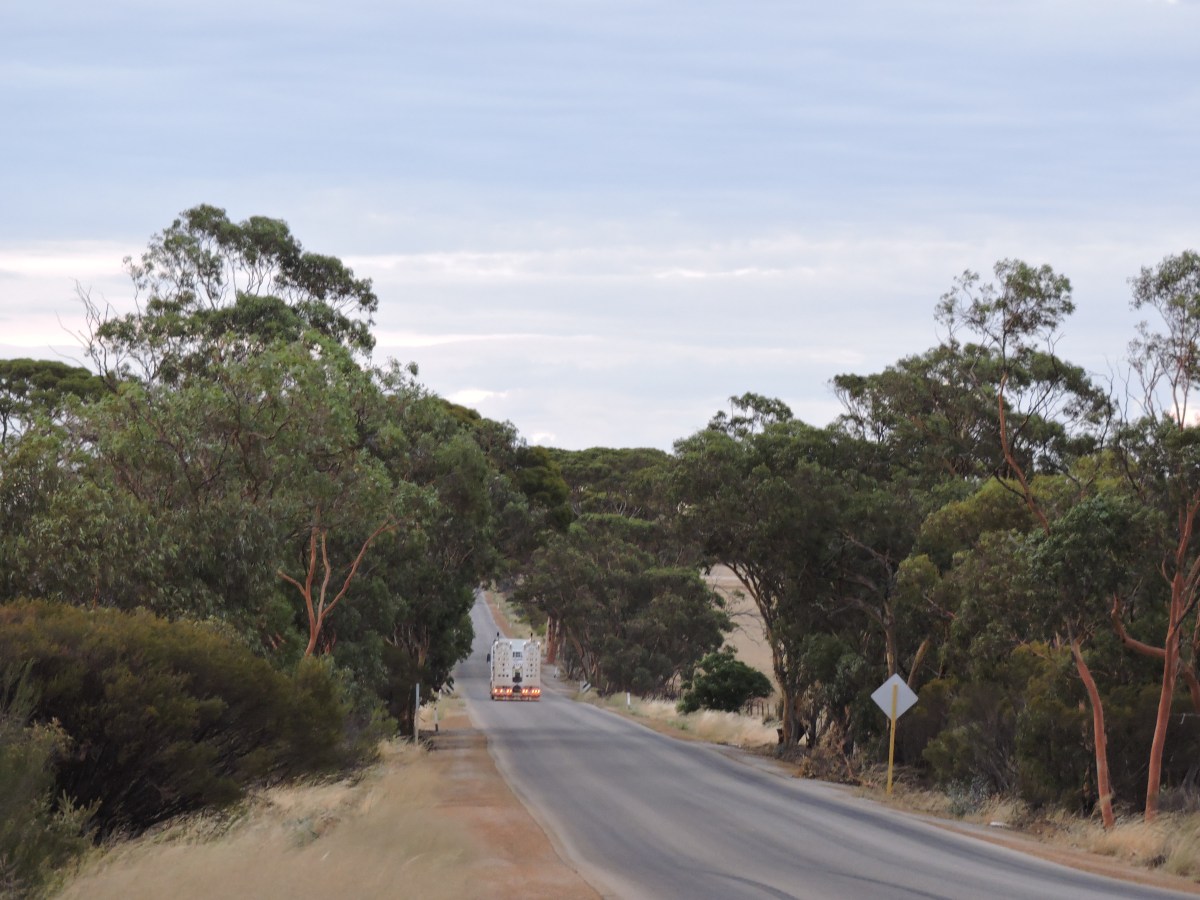
I’m leaving for a town in the Wheatbelt region of Western Australia.  A long drive of some 270 km, it is perhaps, the least favourite of my journeys.  The roads are narrow, the speed limit at 110 km is dangerous, especially when sharing them with road trains, oversized farming equipment and locals who know the area well.  Those familiar with the roads, don’t always follow speed limits and are impatient with those who do.  Fatalities are frequent in this region.  Five of the ten fatalities this Labour Day weekend have been in the Wheatbelt.  It is a sobering thought for this expansive state that covers a third of the land mass in Australia.

Being a journey that demands alertness I have developed a love for the countryside.  Endless open fields, solitary gum trees, carpets of pink and white galahs that find grain in the tall grasses or on open roads where road trains carrying farm feed have passed through, are distinctive features of this landscape.

There is nothing much to do in town.  There is nothing much to choose from where meals are concerned too.  In desperation, I know I will end up at the pub for a solitary meal with laptop for company.

What I do look forward to are vivid sunsets and sunrises across a horizon that is endless.  There is something very humbling in these experiences.  They demand silence.  They demand consideration of life in all its forms.  I recall my son, at knee high, who glanced at a painted Eastern sky, looked at me with eyes wide and in his small voice made larger by awe, asked, “Who did that?”  Who, indeed!

I know I have your prayers and blessings with me on my journey.

As always,

a dawn bird