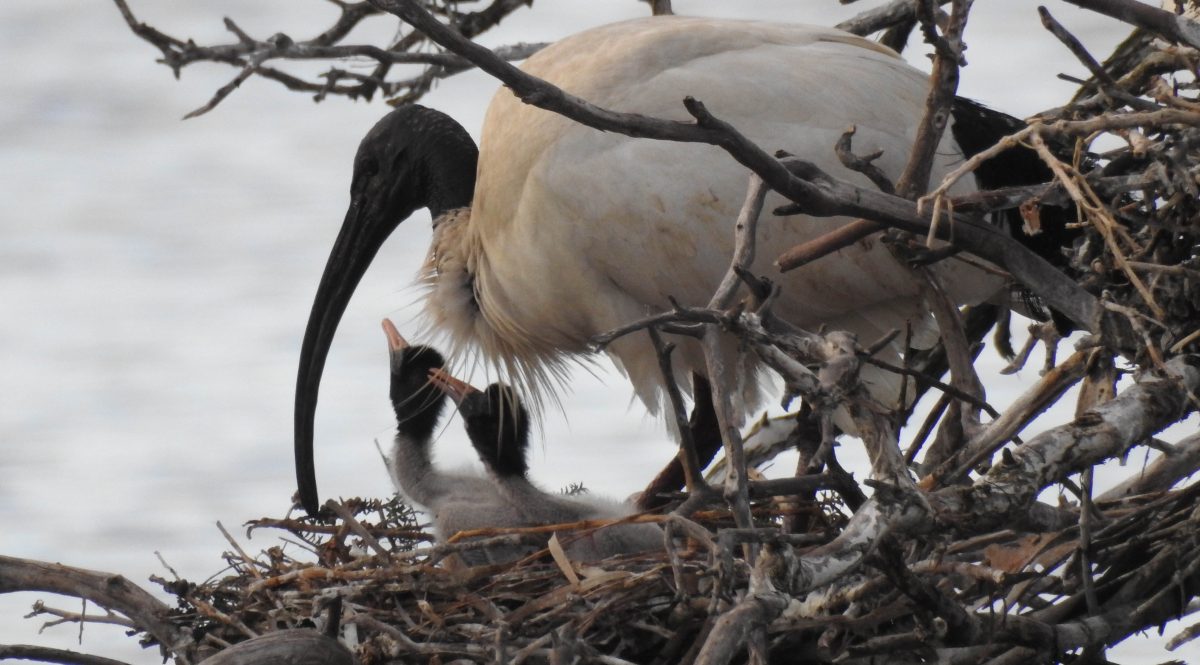
I woke at first light, at 4:40 am and headed to Woody Lake this morning in Esperance. It was my goodbye visit, at least, for this year. The smaller birds were out and about. A lone pelican claimed the lake. I claimed the rest of the reserve shared with birds.  The tiny silvereye was young and bold, sitting exposed and facing the sun.
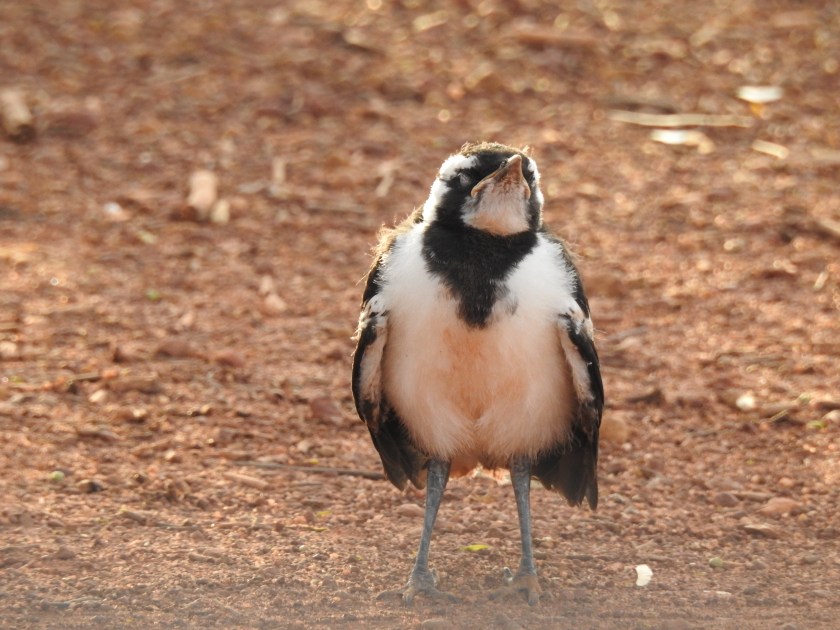
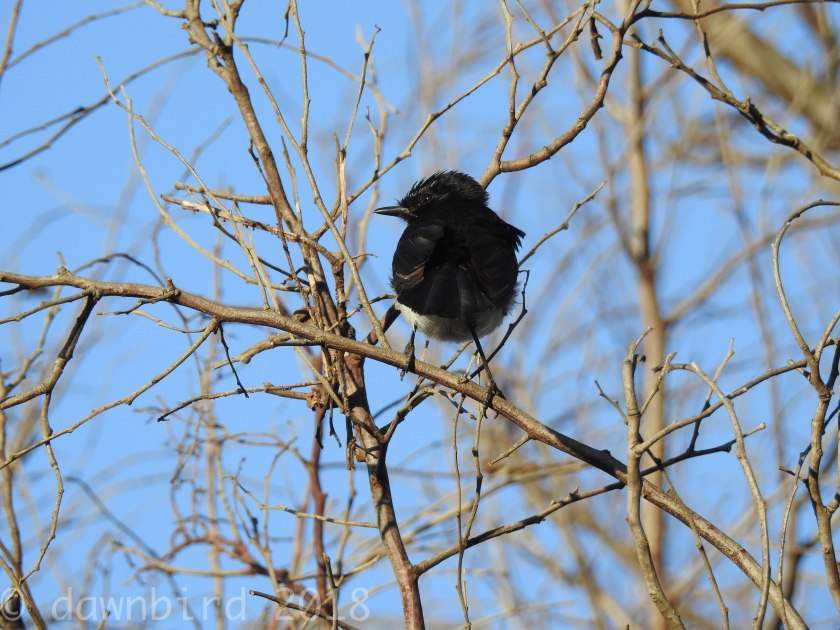 The Willy Wagtail chick was shiny as a new penny …
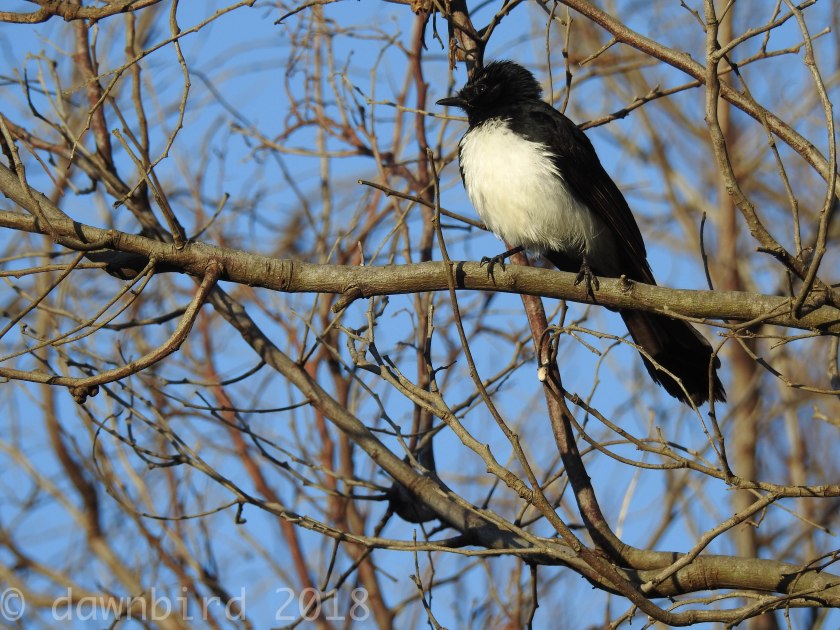 looking intently into the distance with wisdom in beady eyes.
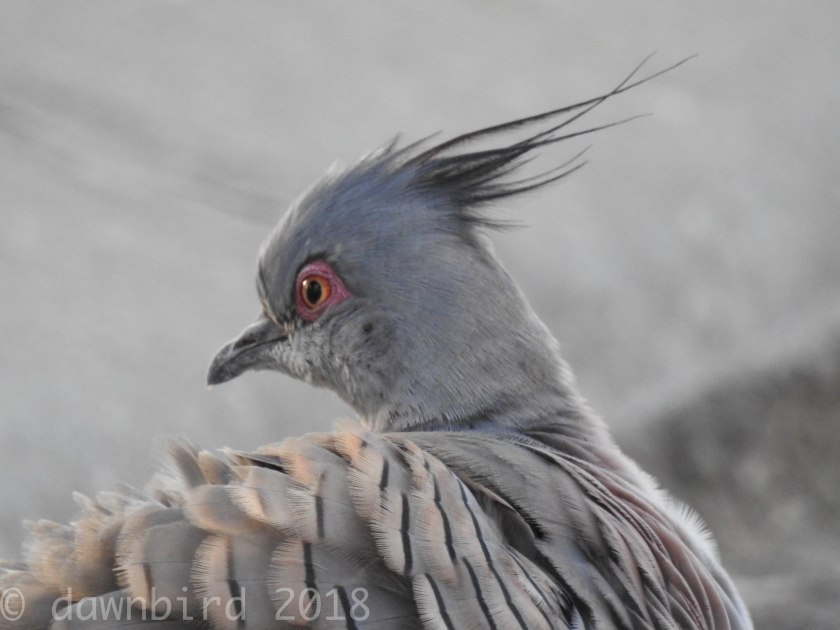 The young crested pigeon was gorgeous with ruffled feathers.
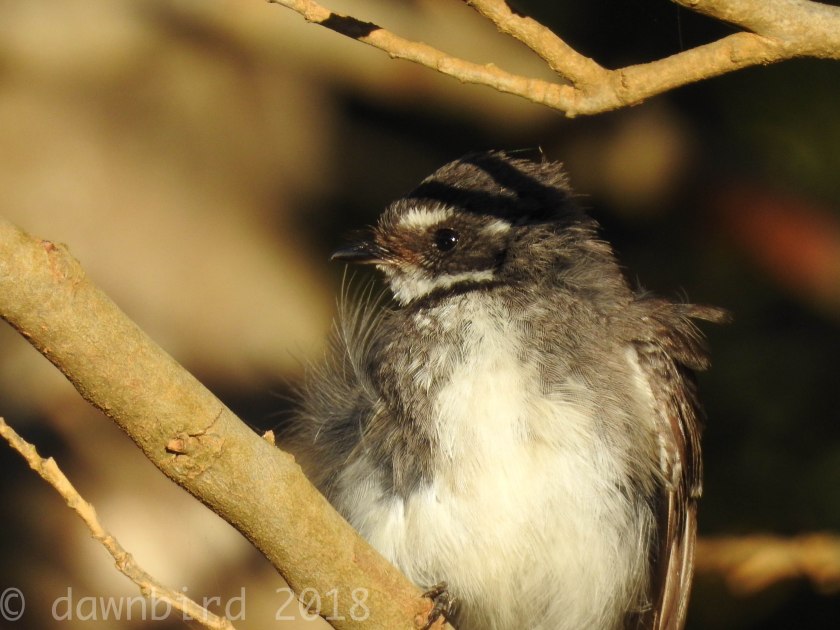 What delighted me the most was the juvenile grey fantail.
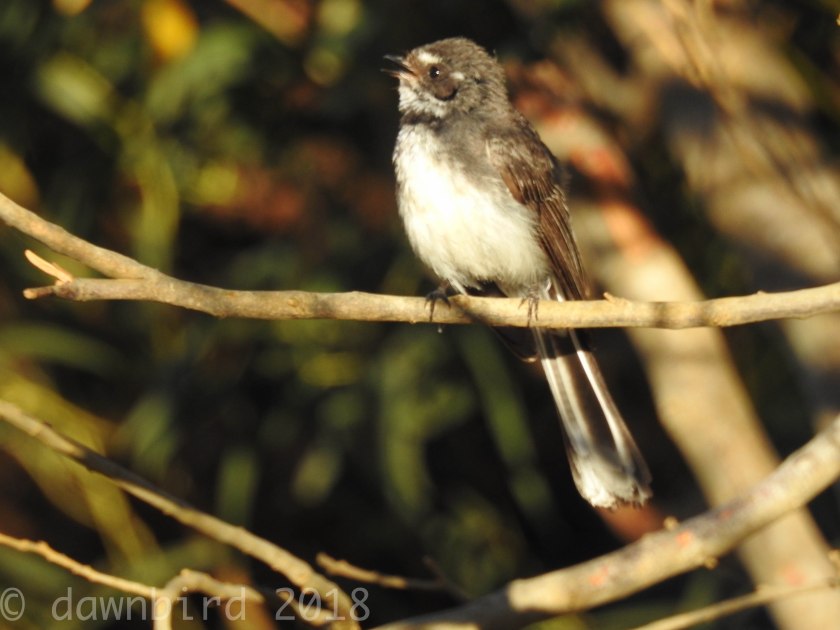 This little one had the sweetest call, an overture that filled the canopy it sat underneath.
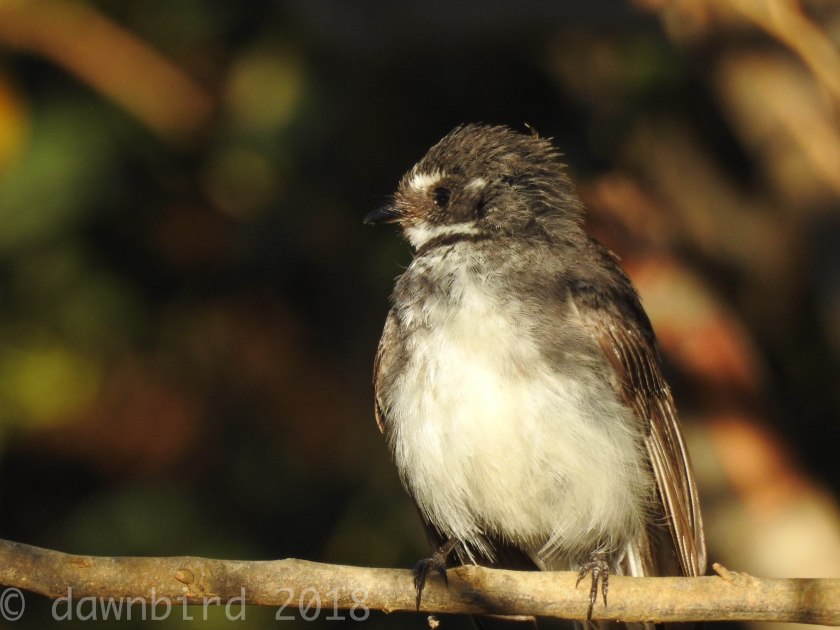 Then a moment of quiet, except for my heartbeat.
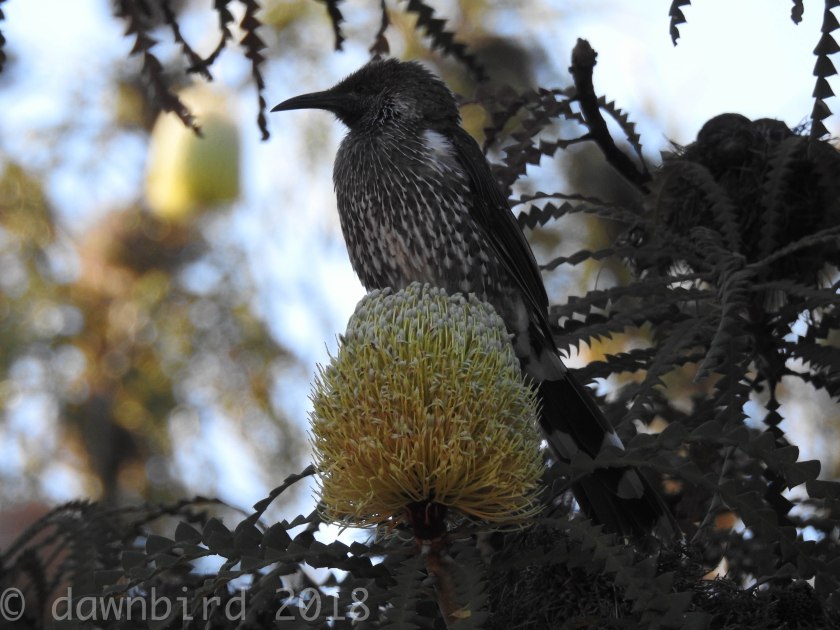 The young wattle bird found a perch here and there on banksia cones. The distinctive metallic call silenced, or perhaps not yet developed.
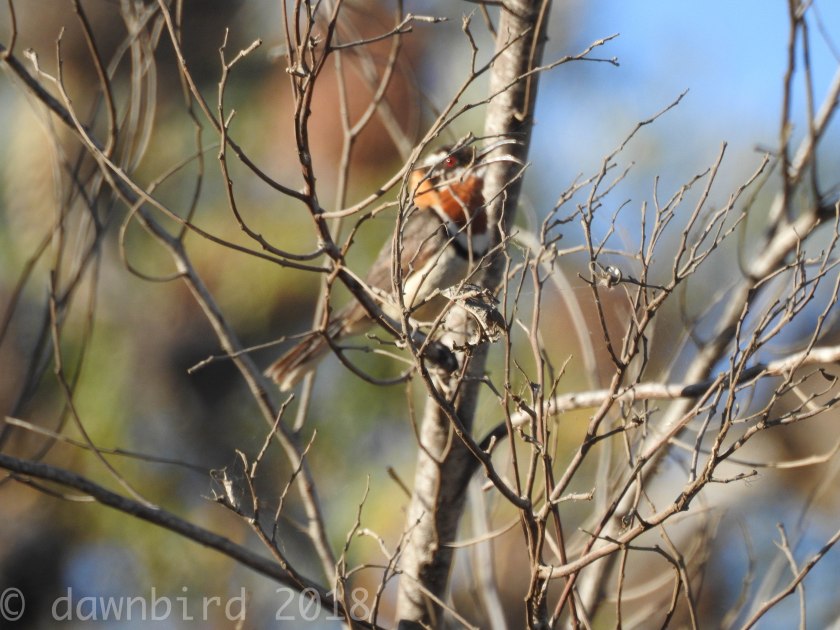 This is the first time I’ve seen a Western spinebill and try as I may, I could not get a better pic but I know I’ll be back next year for it.
I was busy this trip being my last for a couple of months. Plenty of things that needed tidying up. I returned to my hotel each evening, too tired to go out, even for a massage. I saved my energy for this morning. The sights and sounds were a revelation. I saw new life everywhere. It was exactly what I needed. This is the lure of bush walking. The message is always a simple one for me. Be prepared to connect.
Until next time
As always
a dawn bird
 This is a place of history. In the early 1900s the drovers stopped here at dusk, a midway point before they walked across the mud flats with cattle, to the Derby Jetty beyond. The journey must have been arduous for the drovers and their cattle. As is now, the sun would have been blistering hot from early day to night fall. Reflecting on their hardship what comes through for me, time and again, is the sense of community they must have experienced at night fall. The camp fires would have been lit. The talk muted. The cattle satiated having quenched their thirst at the Myall Bore and Trough (another icon), before getting here. What did these men talk about? Did they miss family? Is this the only life they knew? I have walked around this site and come up with all kinds of scenarios and characters that must have squat around a campfire, their weary faces aglow with rest at last. I imagine the dinner of some stew, damper bread and billy tea would have been standard fare. I know this because I enjoyed a similar meal a hundred years later at a cattle station. After their meal, the embers would have been contained in the campfire, swags would have been opened and weary bodies wrapped within only to be unwrapped before dawn, when the next day would begin. These men would have worked and rested as one, they would have got the other’s back and watched out for mates. They were community, friends and family on the road. To do this, they had to stay connected. They must have known, for the common interest, the common goal, they had to be.


 The water pipe that runs from Mundaring Weir in Perth to Kalgoorlie, a distance of over 500 kms has been supplying water to the Goldfields for over a hundred years. Driving alongside it or watching it meander through fields gives me pause for reflection. The building of this infrastructure would have been gruelling work in heat with minimal comforts by those who may have yearned to be prospecting for gold instead. Little would they have known, their contribution is a lasting legacy since 1896. It is also ever present company, for solitary travellers, like me.
 I’ll aim to arrive just before sunset. It’s always a challenge to get to the town before it is too dark. I dislike overtaking slow traffic on this road. At this time of year, I expect oversized farming machinery and drivers, all wanting to get to wherever, five minutes earlier. I usually stop at a rest stop alongside paddocks between Kellerberrin and Merredin and enjoy a few minutes of quiet. Always different, it’s a highlight for me just before destination.
 Whether it is light or dark, the painted silos announce I’m either entering or leaving town. I love them. They are the bright and beautifully thought out art by Kyle Hughes-Odgers, his canvas, 12 storeys high.
 I hope to stop for a few minutes at Merredin Peak, where the foundations of the Military Hospital are still visible. Transported from Palestine in 1942, it was a hive of activity for those recovering from war and those who cared for them. It is a place of paradox, historically and contemporary. From the ravages of war, they came here for the peace, to heal. Ironically, in this place of peace, one remembers war.
 A Shared Space
You must be logged in to post a comment.