I had never thought to look for wild orchids in Helms Arboretum, Esperance. I usually park here for a few minutes when I visit the town to enjoy the parrots in the tall gum trees and to catch a few minutes alone. But having read a blog recommended by Tracy (Reflections of an Untidy Mind), I walked around instead of staying in my car.
Wild orchids love debris of leaves and fallen logs. So do snakes. Dugites look like fallen twigs. They are deadly and agile. Spring time is their time. Maybe that explains why I have never walked around here before. But I was prepared this time for bush walking and dressed in my best protective gear. I stepped off the plane to here.
 To the novice, this is just rubble. Not me. My heart raced as I walked around. I anticipated seeing some wild orchids, just as the blog had published.
 Soon I found the first orchids.
  Tiny bulbs. I had never seen orchid bulbs before.
 The donkey orchids bloomed, stained like tortoise shells, in their hundreds.
 Among the grass there were spider orchids.
 Oh! so graceful in bud!
 When blooming, they danced around, ta da ing their way across grass and rubble.
 Their heart, exquisite.
 Some bloomed in trios, each more graceful than their neighbour, in still posture.
 I headed over to the Lookout where there is a steep gradient over granite rock to bush land below. I’ve found white sugar orchids here before, so I went looking. I wasn’t disappointed!
 There were some that were stronger in colour. Each detail so perfect in dusk light.
 Others, tinted white.
 And others, deep in the bush, barely pink.
I have no other words to describe these orchids, other than ballerinas, because they dance so gracefully, in the breeze.
They lit up my heart, eyes and mind.
Until next time
As always
a dawn bird
PS Thank you Tracy!
 The Lair was a florist shop. There are thousands of flowers and different species every few steps. Instead of rubber necking, I decided to explore one side of the track before exploring the other. I also decided to look for the smaller flowers that the eye can barely see.
 I found tiny purple tassle flowers.
 Blue lechenaultia blooming in some corners.
 While others responded more slowly to sunlight. Blue and purple flowers are more difficult to see in dense bushland where white, pink and yellow are dominant colours in spring.
 I spent a lot of time with the exquisitely tiny paper everlasting flowers. They are barely visible to the naked eye.
 They love the sun and open at first rays before one’s eyes.
 How cute is this?
 I loved the white flowers too, interspersed among the pinks.
 The tiny pink fairy orchids were scattered here and there.
 The sundew were less frequently seen this month. I love these flowers.
 The hakea tassle flowers were frosting large bushes, white with pink tips.
 I found this beautiful white orchid, demurely blooming behind a log.
 I thought this was moss but it looks like a succulent of some kind.
 This was the only pimelea I found during my walk. Beautiful!
 I heard a squawk above my head, only to find a young redcap parrot, all ruffled to greet the day.
 While another young parrot groomed nearby.
 On the ground, the red breasted robin kept me company.
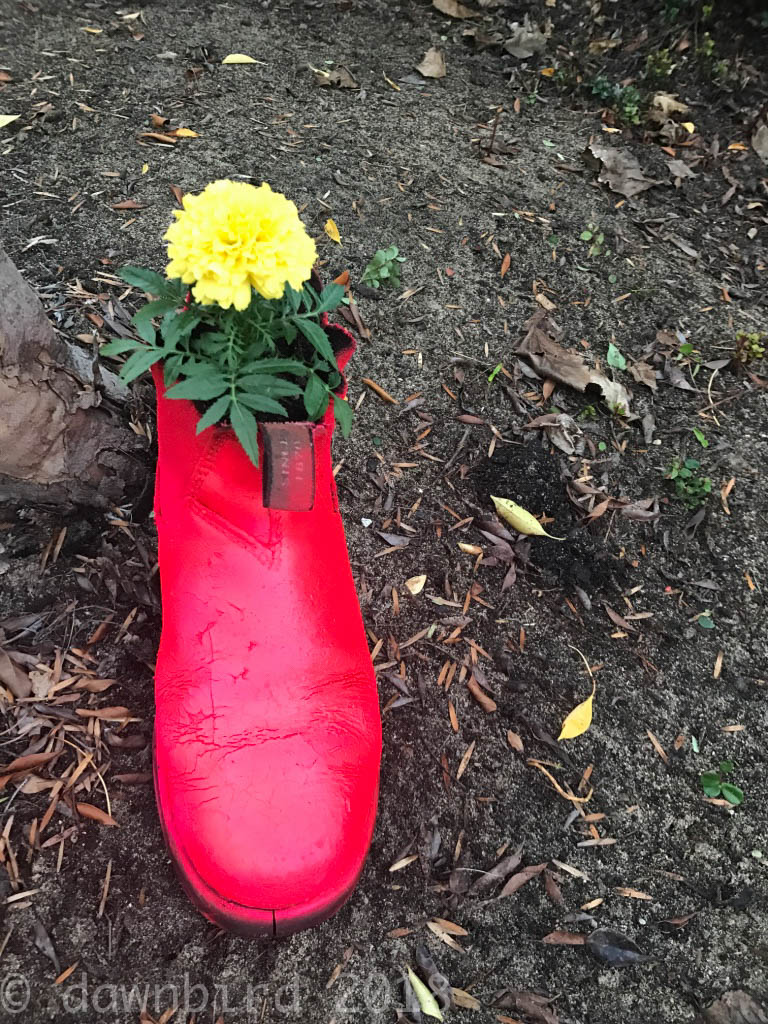 The boot sits outside my study window. It reminds me life is fragile, and living in community makes one stronger. I take time to talk to strangers. They love to talk about their community, I’ve found. Like the old boot that no longer dances, but the story of its new life, can still make a heart sing. So I consciously and mindfully live life closer to the source and Source.
 The clump of snowdrops at my doorstep has grown, having arrived three weeks later than they did last year. They seem to have survived another year of my old gardener’s enthusiasm for clearing flower beds and his failing eyesight!. I looked through dozens of flowers and found myself wanting to see what was under the hood. Now I know!
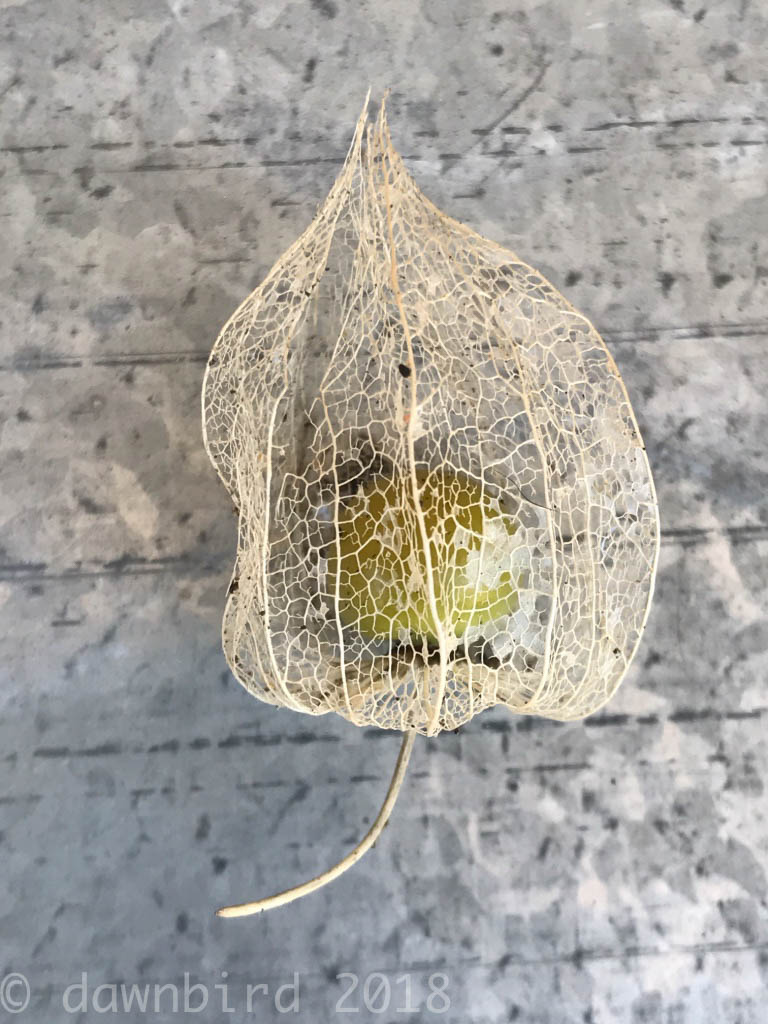 In the back garden the Cape Gooseberry is fruiting. I love this fruit and they hardly ever stay long enough on the bush without me picking off the lanterns while still green. I found this one on the ground, encased in gossamer, the detail, exquisite.
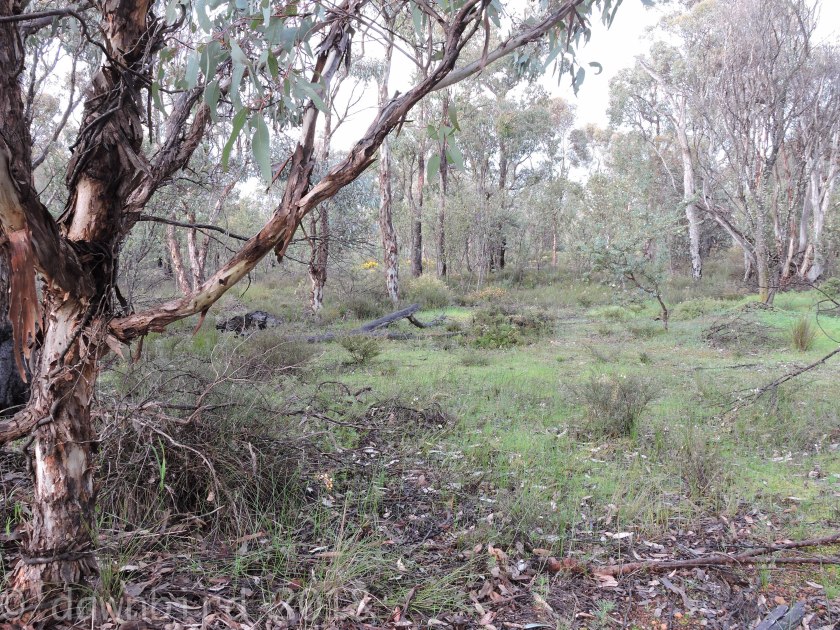 I know while bush walking, there are tiny flowers and foliage to search for and delight in. I also know some folks are intent on the walk itself, and miss what my eyes search for. I also know that’s their journey, not mine. So I let them walk by.
 What I search for in bush country, are the tiny wild orchids that grow in impossible places. They remind me of a plaque I have in my study “Bloom where God plants you”.
 This year the orchids are prolific.
  I love the detail of these delicate orchids that seem to bloom in harsh conditions, with attitude! If this is not a diva presence, I’m not sure what is!
 And who can walk past the beautiful banksia and not stop to marvel at this wonderful plant. I love the symmetry of the prickly leaves too.
 There are tassle plants growing everywhere and after uploading the photograph, I can see the details, hidden to the naked eye. I’ve come to learn through photography, beauty is often sensed and not always seen, until later.
 These are mallee and gum trees. The mallee is like a gangly teenager, with out of proportion limbs and leaves. Or, so I thought.
  When I stood under it, I had to ask myself, how did I miss this before?
 Yes spring is here. The turnip weed flowers are everywhere alongside roads and highways. The soft canola, is painted across the landscape in broad strokes of vivid yellow.
 Fifty kilometers from town, I noticed the sun was setting to my left and a huge moon rose from behind a grove of trees on my right. Startled by the silent luminosity, I had to stop to take a picture. The presence of it in the sky calmed my spirit. There was benevolence in the light. The only motorist on the road, I slowed down, no longer alone in poor weather.
 Next morning I walked around the reserve. I’m usually alone here so I claim this as mine each time I visit! Winter has left it lush with bright yellow daubes of acacia everywhere.
 A closer look at the spikes of flowers is worth the moment of quiet.
 I stood in a ‘forest’ of banksia. These ones are quite different to anything I’ve seen elsewhere.
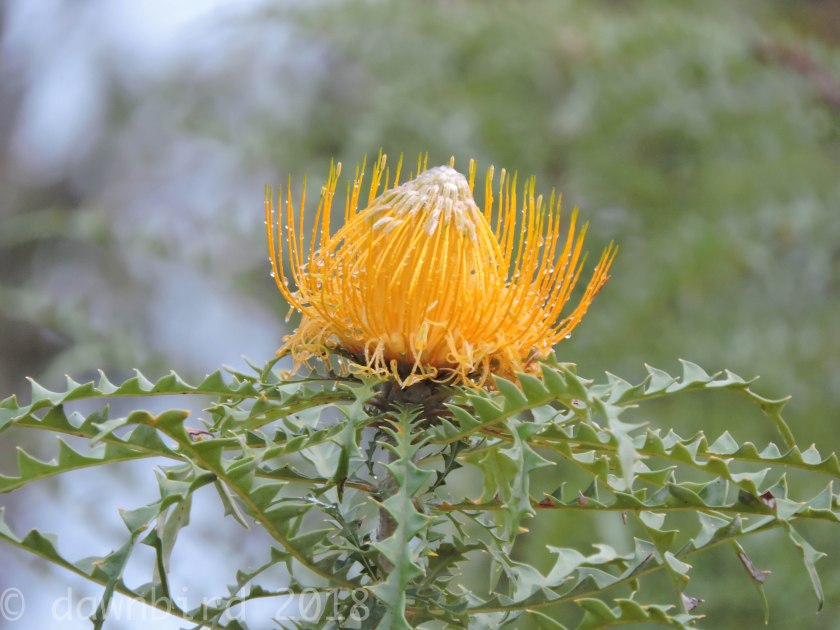 They are a beautiful tumeric colour with the tip, dipped in white. A ‘ta da’ moment comes to mind!
 I’ve learned to look at my footsteps. No longer afraid of snakes (although I’m still snake aware), I’ve learnt to read the footprints of others. Parrots! So I look up.
 This must have been a young one trying his best to make ‘parrot calls’, and not quite getting there. Yet!
 The clumps of hibbertia are everywhere. They are bright in debris that gathers at the base of the gum trees.
 I love this hakea that grows like giant kebabs with flowers blooming intermittently between spiky, sharp leaves.
 I went where I had lunch one afternoon. There’s a cafe to the right of this with beautiful views over water. But no, I wanted to be in the scrub! To my delight the place was teeming with birds. I know them well enough by the call.
 I found a tiny male zebra finch with wisdom in his eyes.
 Then there was the female finch. She flew up, caught the blade of grass in her beak and slid down, showering grass seeds on the ground. She then fed in privacy in the tall grass. Clever!
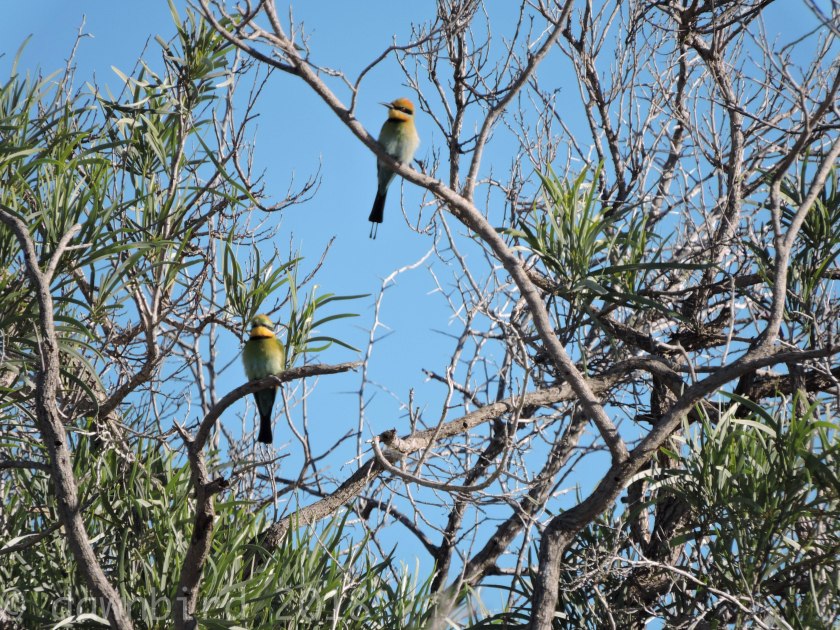 Ever watchful, high in thick scrub, were a pair of rainbow bee eaters. Aloof, silent, predatory.
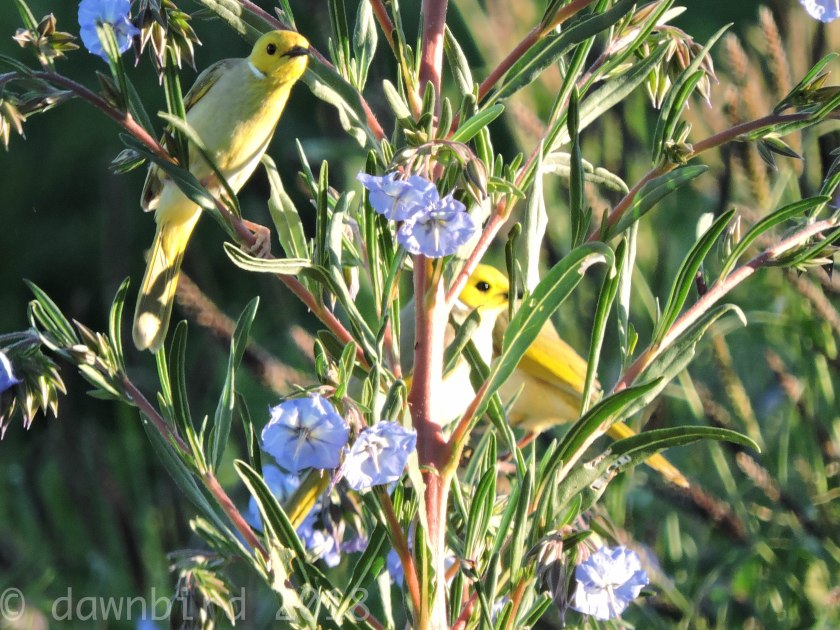 The yellow honey eaters, feasted on flowers, their maniacal laughter-like call, harsh, for such a pretty bird.
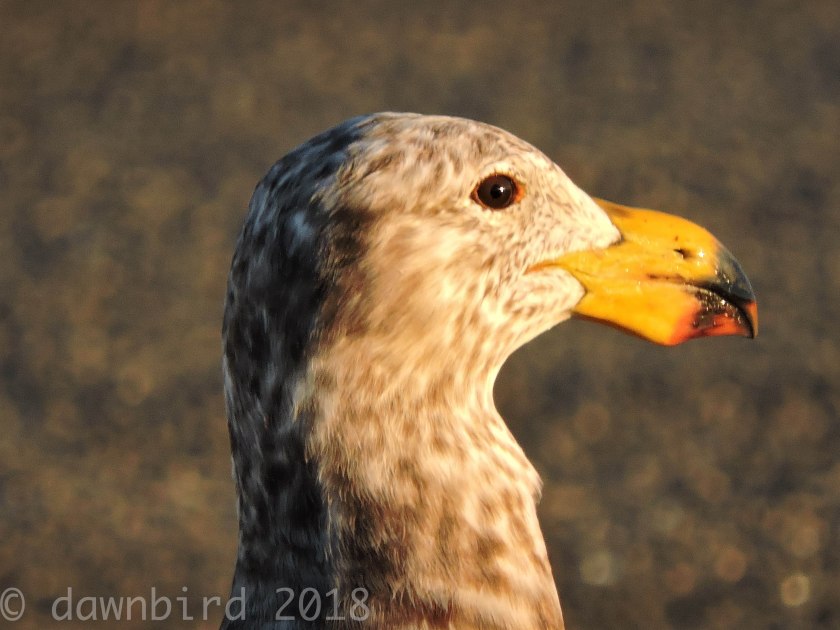 With ‘lipsticked lips’ pursed tightly shut, the Pacific Gull was dignified in defeat as silver sea gulls stole lunch and flew away screeching.
 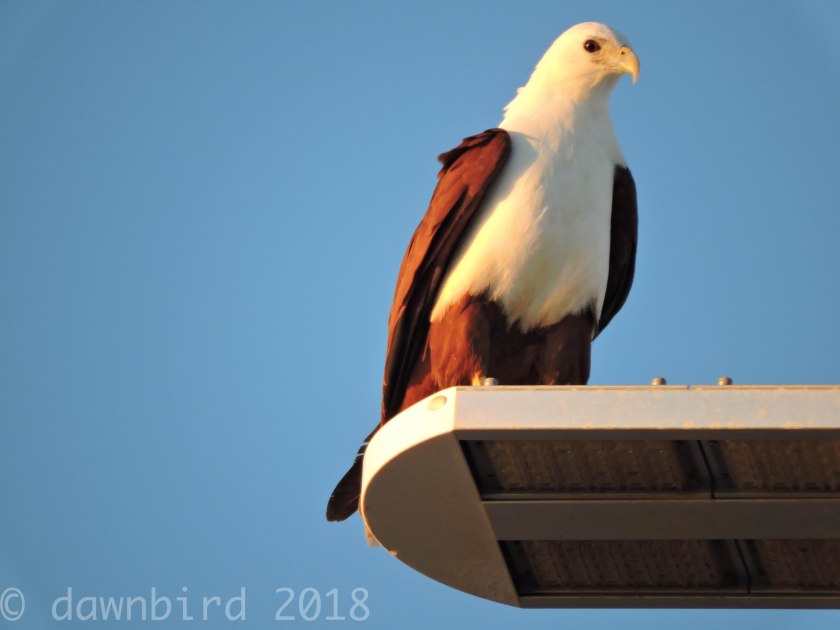 The Brahminy kite (I think), from the highest vantage point, watched all, then flew away silently.
 I went for a quick walk and when I returned to the property, something fell from the tree in front of me.
 A pair of white breasted robins.
  One was friendly and stayed with me. Or perhaps, I was following.
 The delight of company!
 Both equally curious about the other.
 My hands shook with delight so I tried hard to relax, so did the robin.
 It hopped and flew all around me.
 The other hid behind pots but managed one shy look, and retreated again.
 On the road beside me were several inland thornbill, given their size, they are also affectionately known as ‘button bums’. Had I not been forced to slow down, I would have missed this beautiful moment of shared joy.
 The rain had left a puddle in the middle of the road. The birds were thoroughly enjoying a communal bath, undeterred by my presence.
 Some immersed themselves fully and then shook themselves fluffy.
  Others walked away from the puddle with confidence and returned. Dip, fluff, repeat.
 There was one that tried not to get wet and stretched tiny legs to stay upright.
 The result was inevitable!
 While another took a break and found me the curiosity. And, that was just fine with me!
 I often despair watching children with hand held devices. Immersed in technology, they miss the world around them. So when I saw a young boy wetting a line on the beach, Pacific Seagull by his side, it made me smile. He could have been sitting in the hotel room playing video games. But he was out here at dawn, because he enjoyed the experience of what he was doing. He didn’t catch any fish. It was just the enjoyment of anticipation and being near the sea. He had a relationship with the environment. There is hope ….
 I look at the ocean differently. The responsibility for keeping it pristine lies with each of us. The answer to a complex question ‘What can I do?” lies within the question. It starts with “I …”.
 I look at the debris left behind by the tides each day. It’s the kind that makes me happy. Like watching a child fishing at the beach, it also makes me hopeful.
 Between Kellerberrin and Merredin is a parking spot where I usually stop for a few minutes to stretch my legs. The solitary trees in the paddock and the wide open horizon, is a familiar sight. It was dark every where, yet, the horizon was still bright.
 I left Merredin a couple of days later, with the silo paintings on my right. They are a welcome sight by day break, but invisible by night.
 In the dark I knew I had familiar landscape around me. The water pipe, for one. It carries water from Perth to the Goldfields. It was commissioned in the late 1800s and completed in early 1900. It is the lifeline of the people of the Goldfields. I cannot imagine the hardship endured by the workers who constructed this for hundreds of kilometers in harsh country. A reminder, life for me may seem challenging at times, but in comparison, I have nothing meaningful to complain about.
 At night the air was acrid as I drove through tiny towns with streets empty of people. Bakers Hill, Clackline, Meckering, Cunderdin, Tammin, Kellerberrin. At times a distant glow kept me focused. The farmers were burning paddocks in readiness for seed. I’m impatient for winter to see some of these beige paddocks turn gold with canola.
 During one trip to Lake Thetis I searched for the tiny bird for over an hour and then reluctantly decided, it was not my day. I took one last photograph of the Lake before turning around to walk away.
 Then an imperceptible movement caught my eye. By the shore.
 It turned around and looked straight at me! Joy!
 Then turned away, the beautiful red cap clearly visible.
 The stride is quick and effortless.
 The stop and stare, well, fierce comes to mind!
 This bird is a tiny creature. Yet, somehow, has the capacity to fill vastness by mere presence.
 It is hot. It is red. It is dusty. The sky is blue. It is magnificent.
  There is a solitary tree at Spoilbank, in South Hedland. It is my favourite view from across the water. This is harsh country exposed to cyclones. I love the statement it makes.
  The muted shades of dusk.
 The day ends beyond (tidal) Pretty Pool. It casts an iridescent glow.
 The bird life at Pretty Pool is discreet. This heron was among the mangroves. It was barely bigger than a crow.
 With a stretch that was amazing!
 The tide had left a calling card.
  My favourite place early morning is near a church. The eagles like it too.
 The magnificent cargo ships glide by, often without sound.
 I’ve visited Cemetery Beach before when the turtles were hatching. (Yes, the beach is across the cemetery!). This time I found sculptures on shore. The real turtles in the sea were too quick to photograph.
 A beautiful egret. An Eastern Reef egret, I think.
 The rugged Pilbara shore.
 The greenest growth is at the point of pruning.
 Solitary can be a powerful statement.
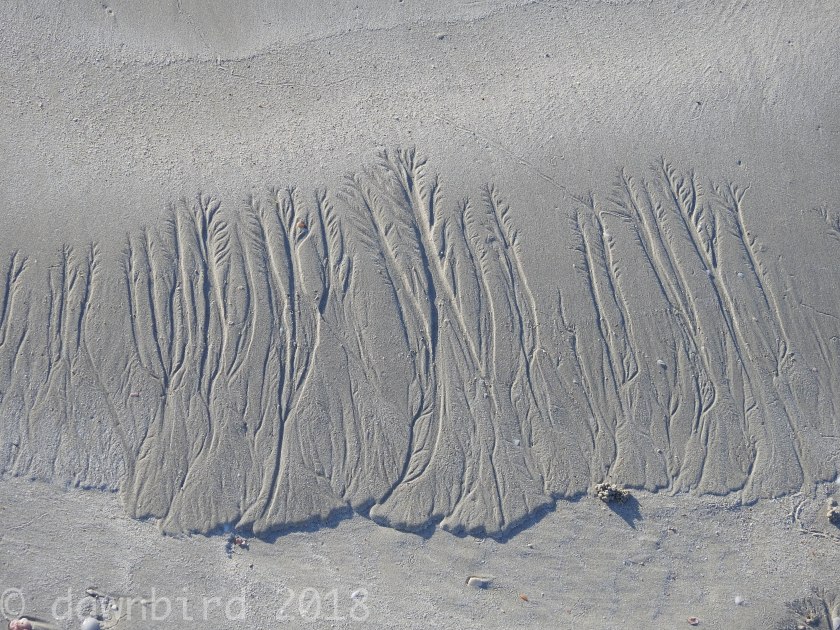 I no longer look for permanence. Transience is appealing to me. What ebbs and flows, like the breath of life, is a gift. We see this in tides, sometimes shells, sometimes, a forest of boab trees in the sand.
  I also know a boab tree is strong, and will wait like a friend, withstanding tide and time.
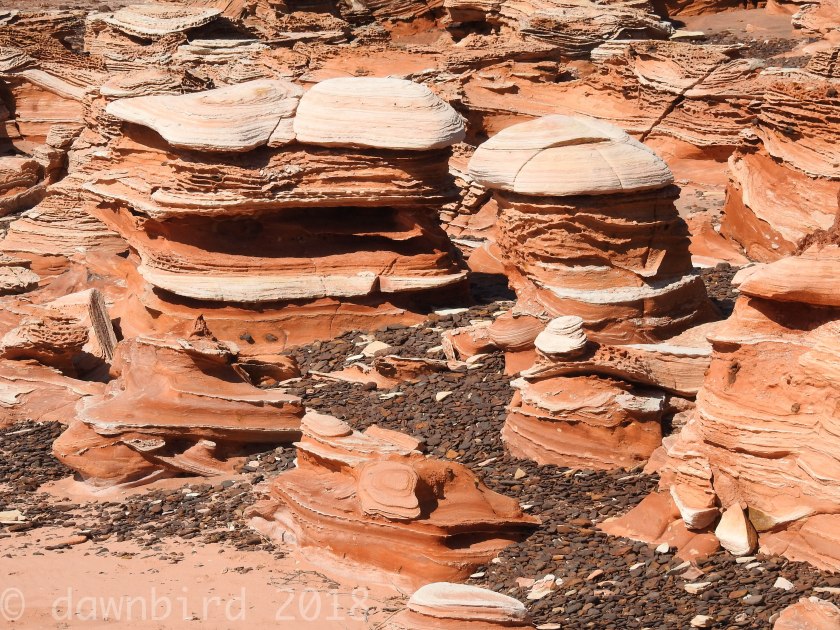 At my leisure I read sea stories of ancient times, carved in stone.
 I’ve learned lessons from migratory birds in flight. And, like them, I now travel light.
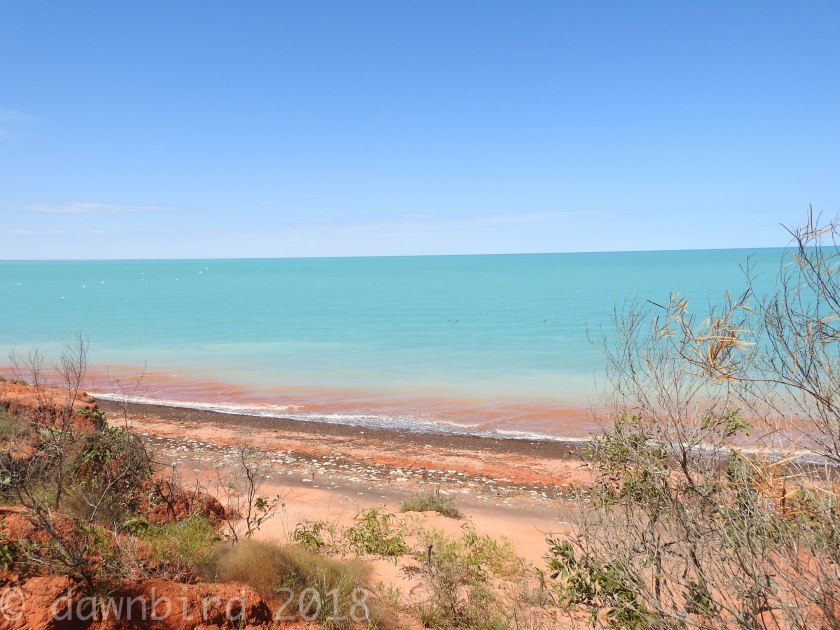 Cauterised, I now watch the tide soothe ruffled edges, as the pindan cliffs bleed into the sea.
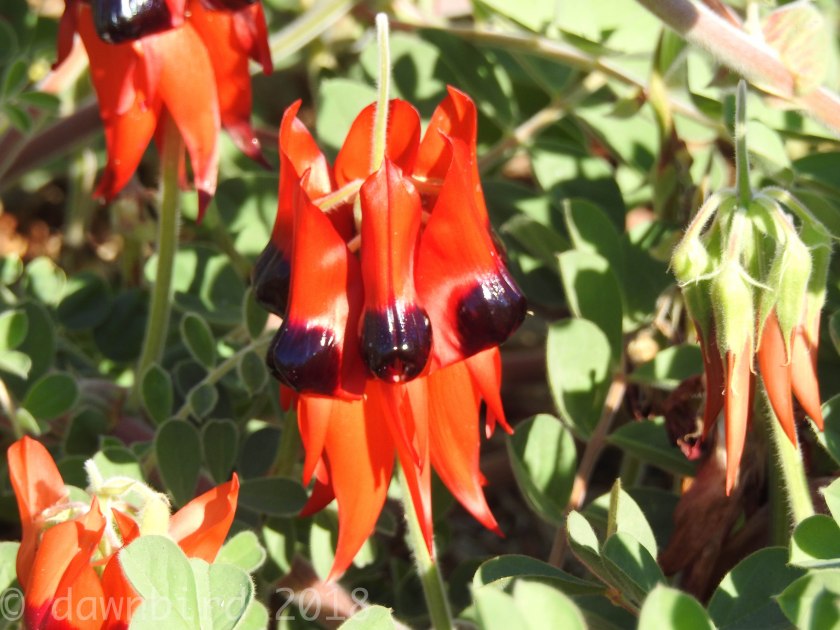 My eyes scan roadside for three eyed monsters. They help reconnect to the child in me.
 A red eye, is a ruby.
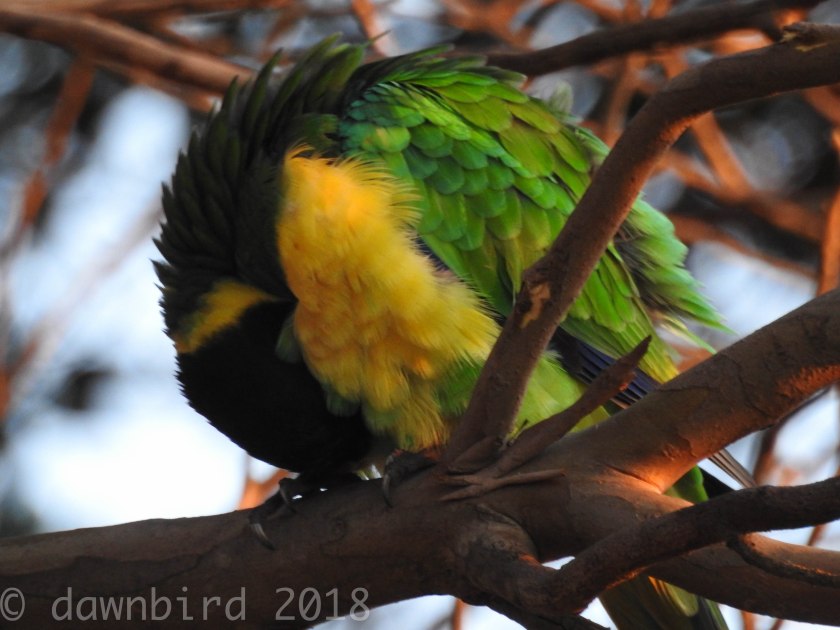 A ball of ruffled vivid feathers is gorgeous, but …
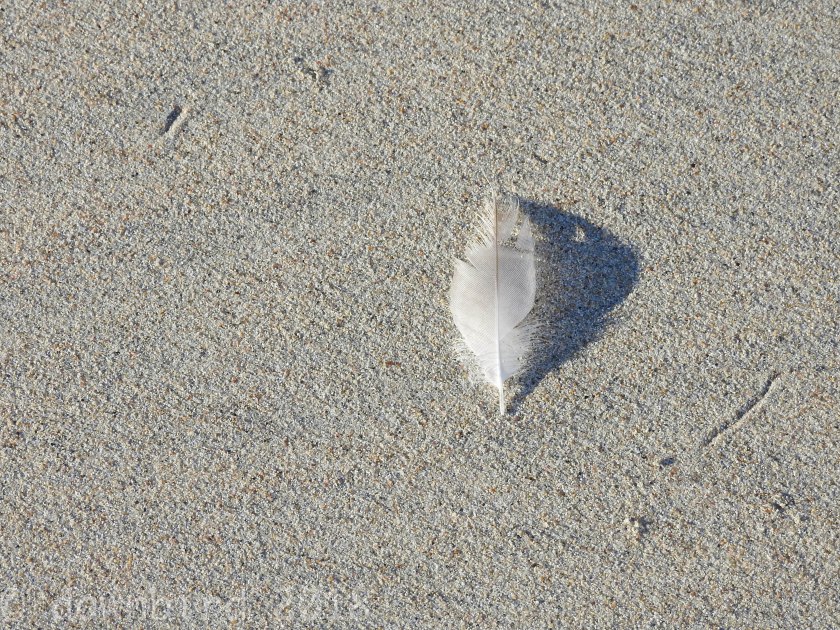 A single white feather, is peace.
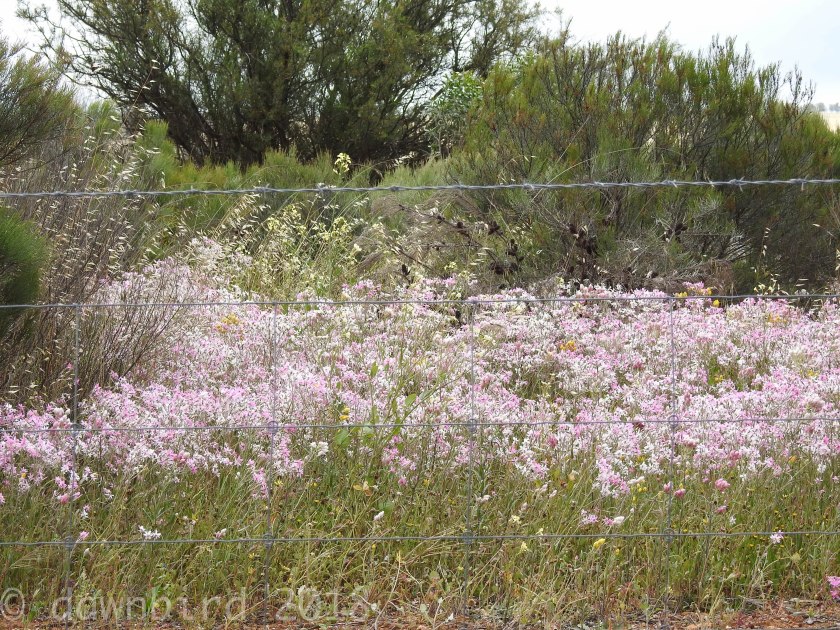 Driving through the Midwest, I realised, why settle for a bunch of flowers when I can have a paddock.
 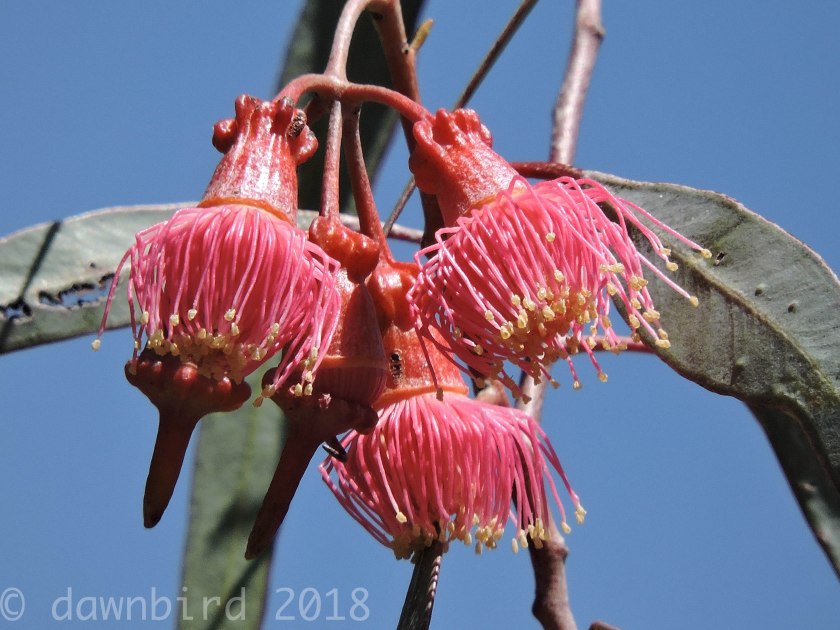 I’m always amazed to find pink in tough, mining towns. On reflection, given the volatility of the industry and profession, perhaps it is Nature’s way to symbolize hope.
 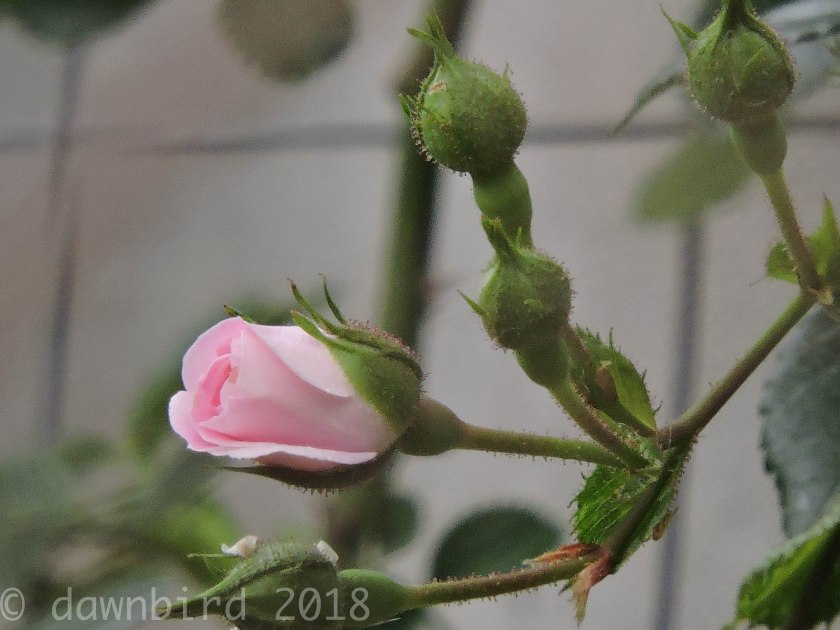 Every time I return from a trip, a neglected garden reminds me, it will continue to bloom, with or without my presence. A helpful reminder for ego, so I take notes.
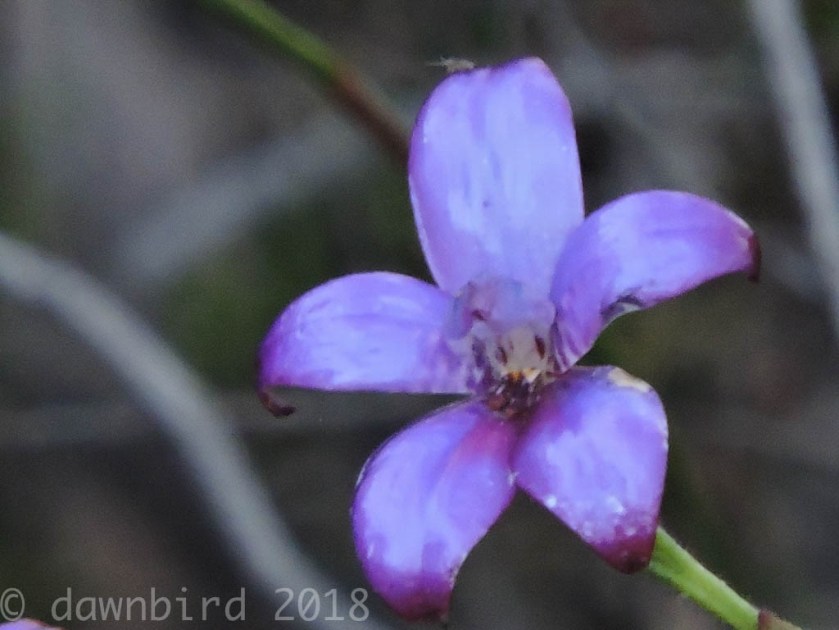 There are no words to describe finding one’s first enamel orchid along a bush track but I’ll try. They look shiny and plastic. The crick in the neck from the double take was worth it! They are breathtakingly beautiful.
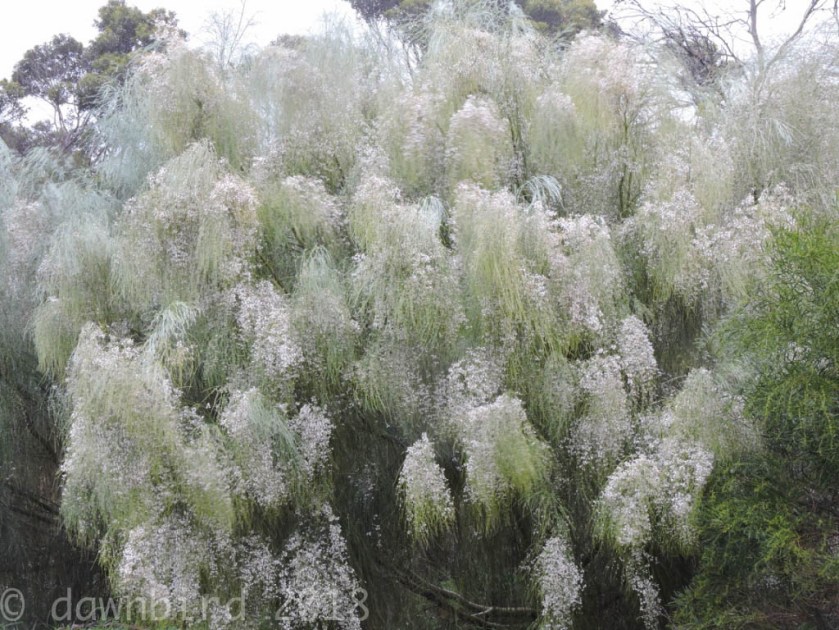 Likewise discovering that shaggy bush in Esperance, turns into a gorgeous waterfall acacia came as a surprise like no other one spring.
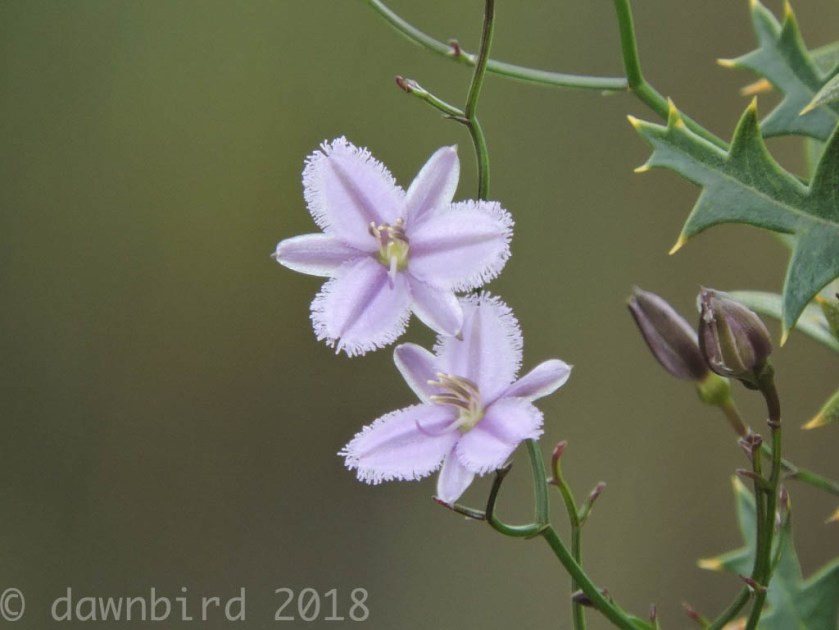 If one summons enough courage to visit Lesueur National Park early mornings, when there is no one else there but Nature, the drawcard is easy to see.
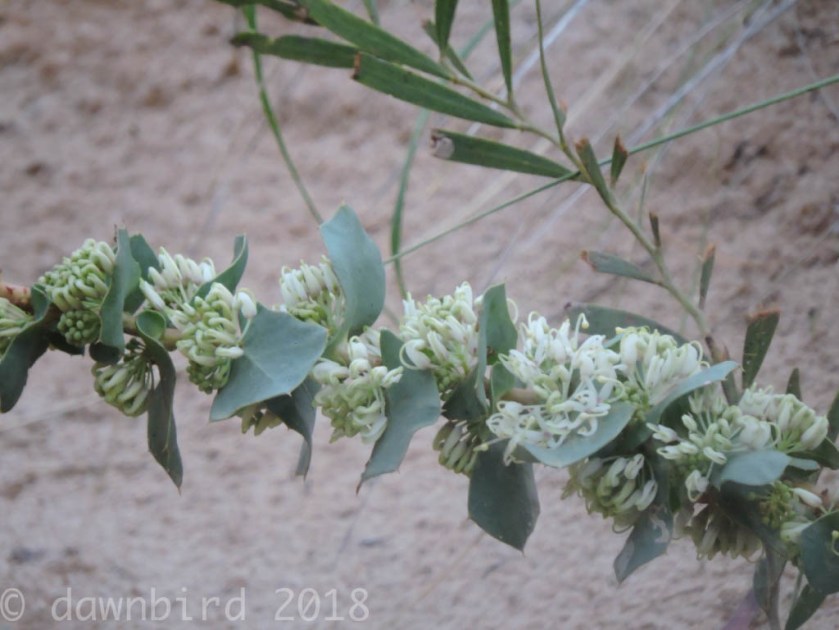 I found ‘kebabs’ of flowers there, too, so the gnawing hunger pangs make me return again and again.
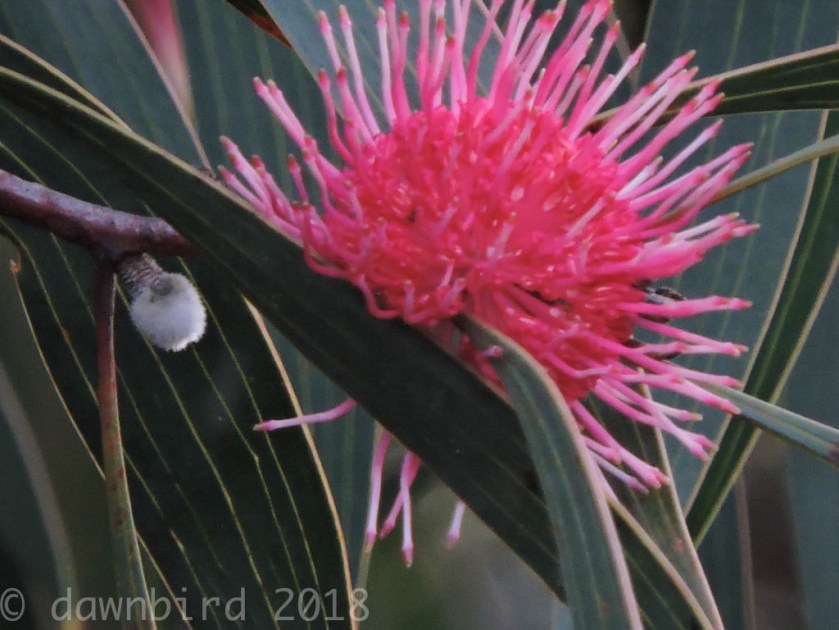 Pom poms along bush tracks brings out the inner cheerleader, I never knew resided in me.
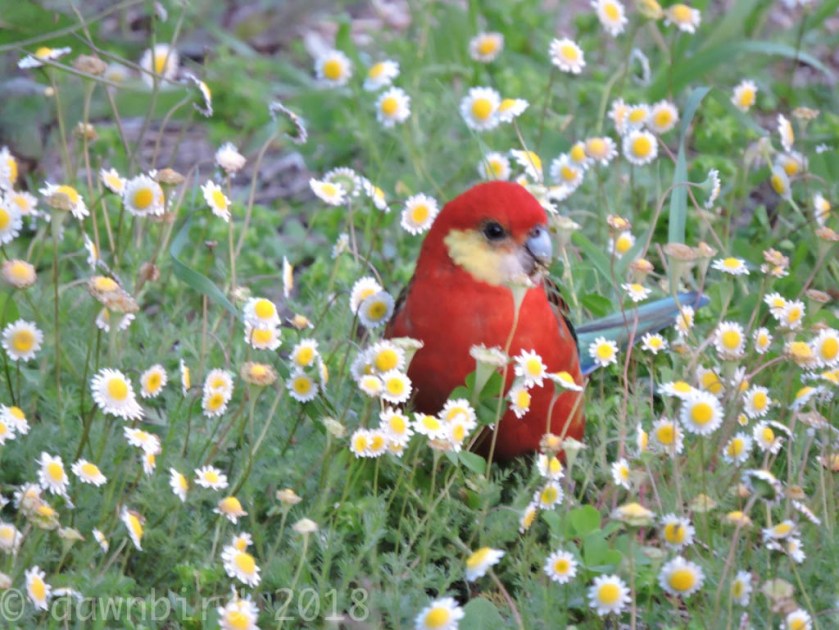 There’s infinite joy when a small bird allows you to keep it company.
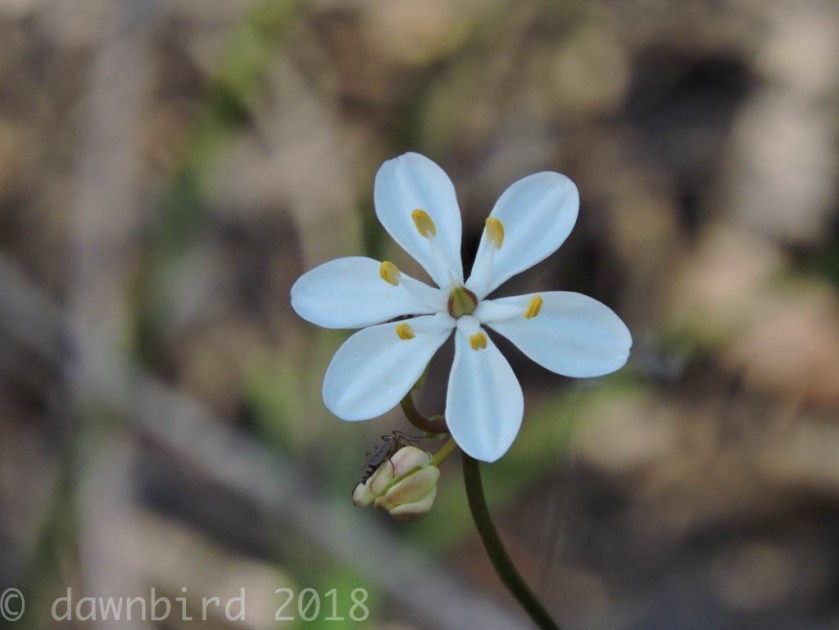 In a still moment, unadorned simplicity, is where Nature does it best.
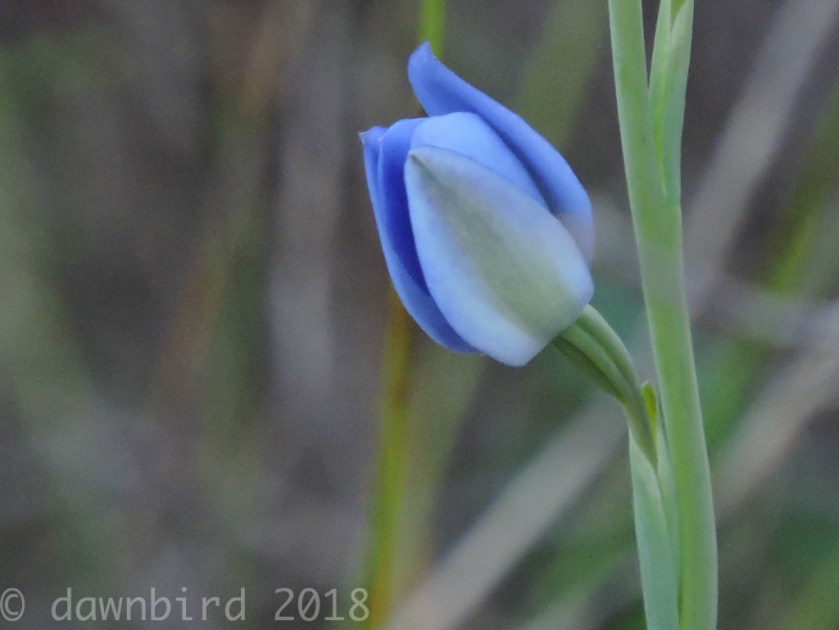 There’s a certain beauty to waiting before bloom. (I wish I knew this in my youth).
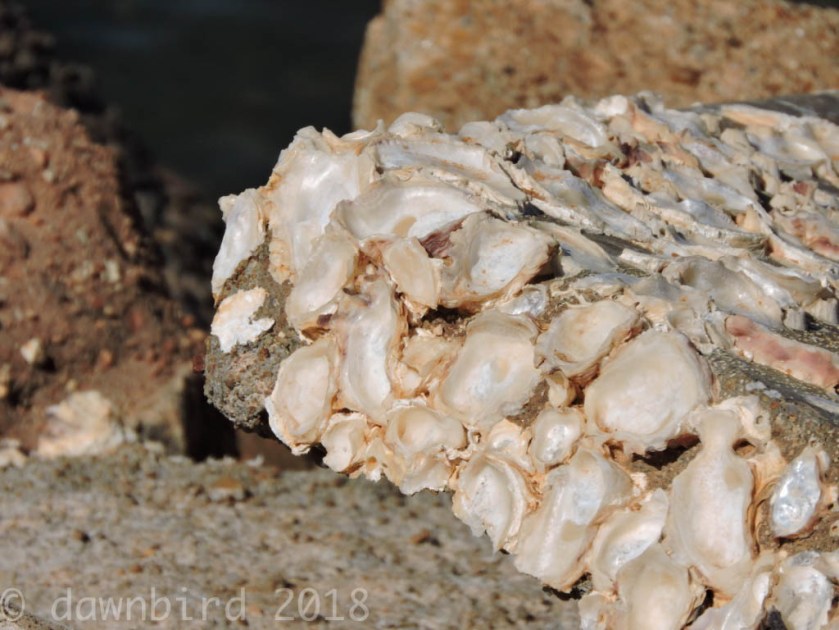 Rice crackers are found on the beach, if you look for them hungrily.
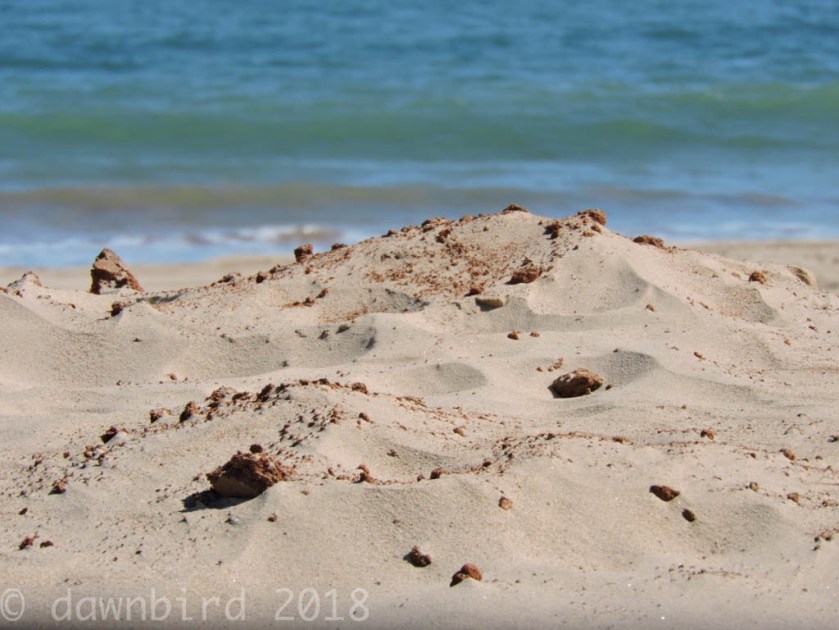 The sand dunes are not an obstruction between me and the ocean.
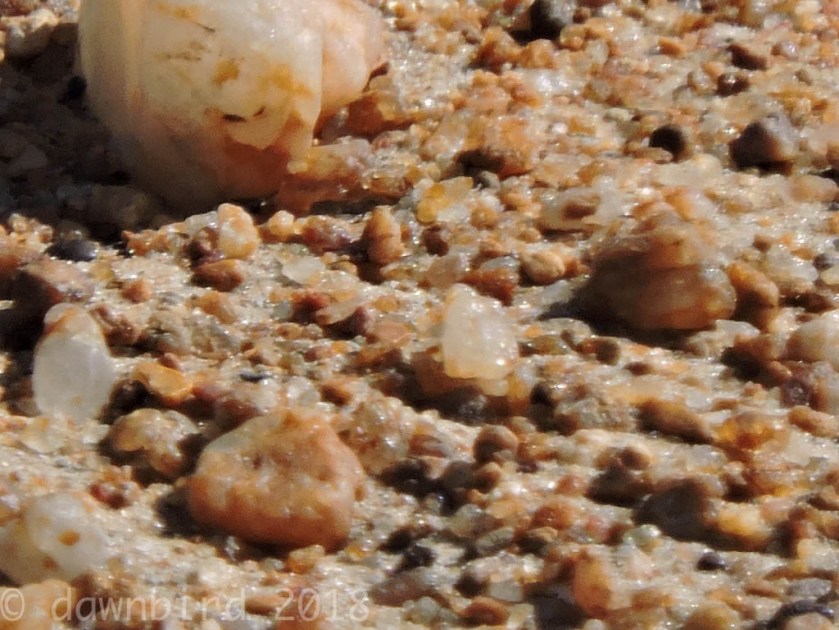 They are made from tiny shells and quartz. Each piece infinitesimal and exquisite.
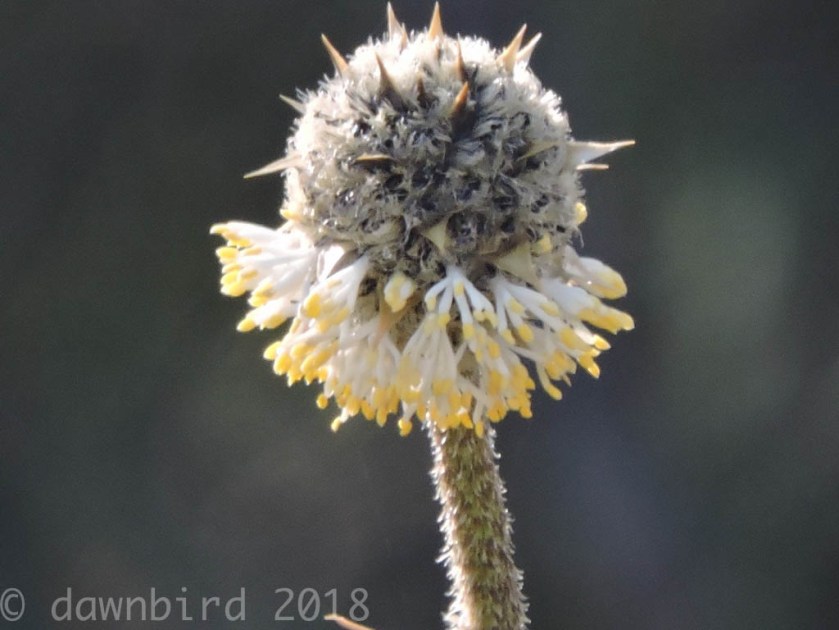 A pesky weed is beautiful too.
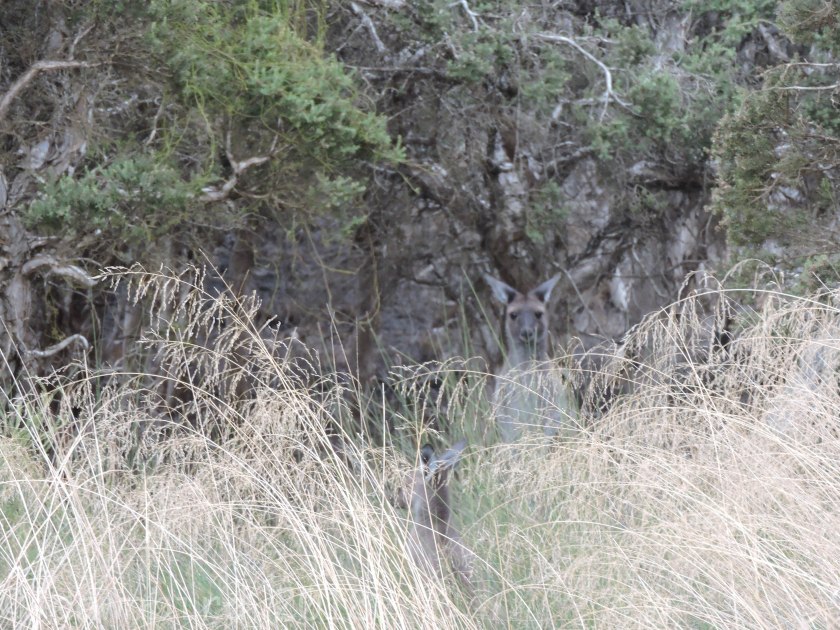 I did a double take and zoomed in. I wasn’t alone! My heart pounded in excitement.
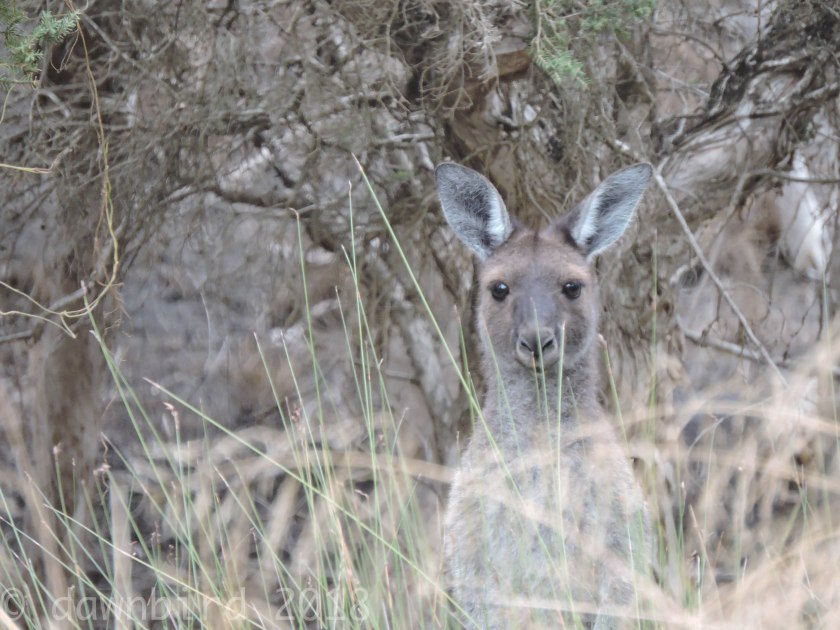 I zoomed in as slowly as I could.
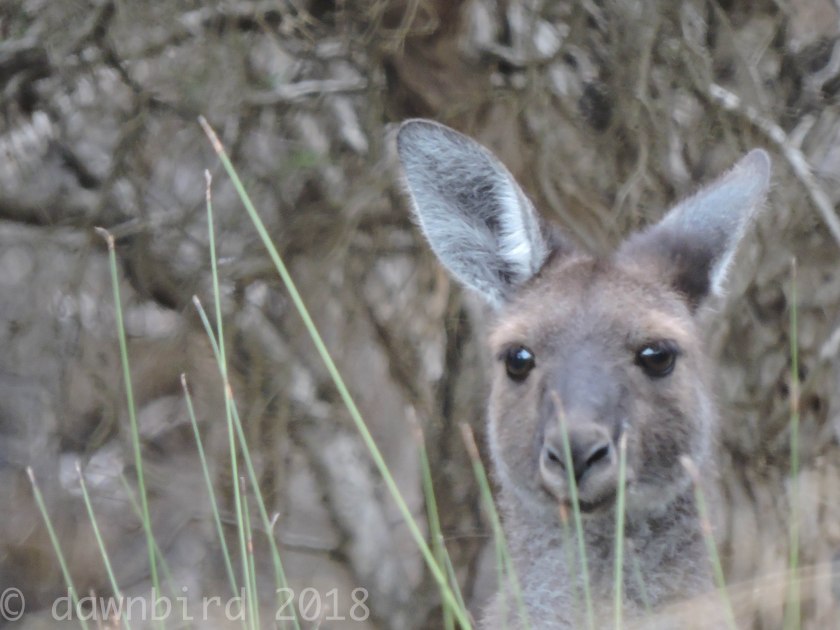 And, closer, again.
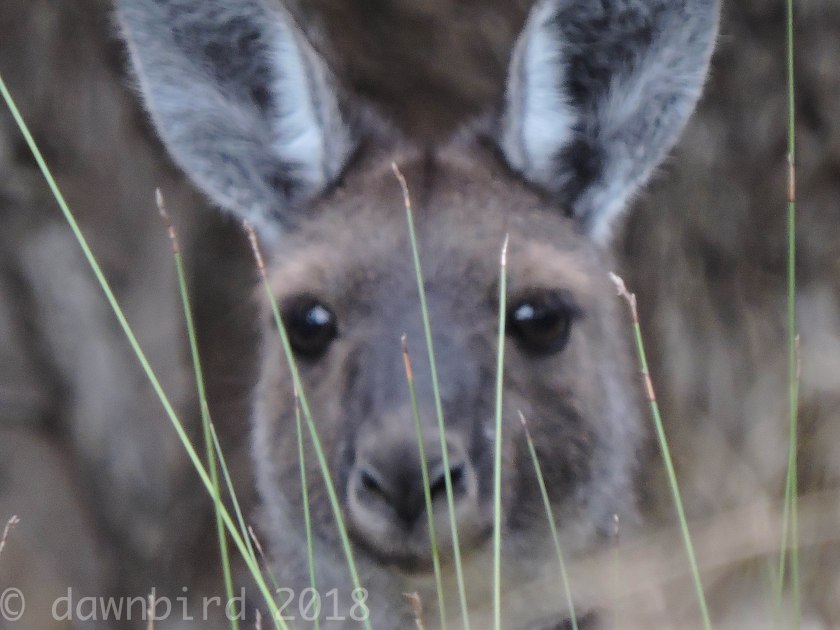 And again.
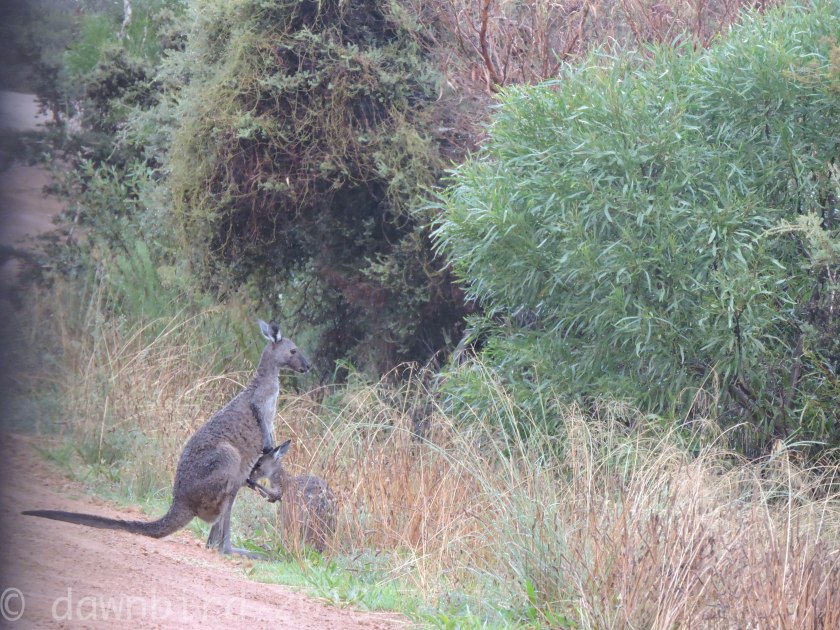 The next morning, I headed out to the reserve again. The air was alive with tweets and flapping wings of the larger birds over the lake.
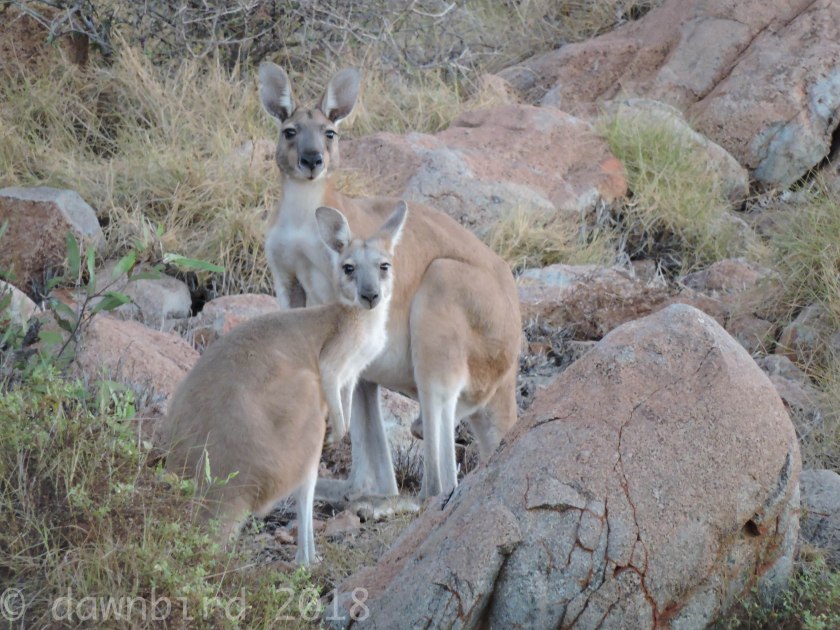 I’ve found mother and child stay together, as long as necessary for survival.
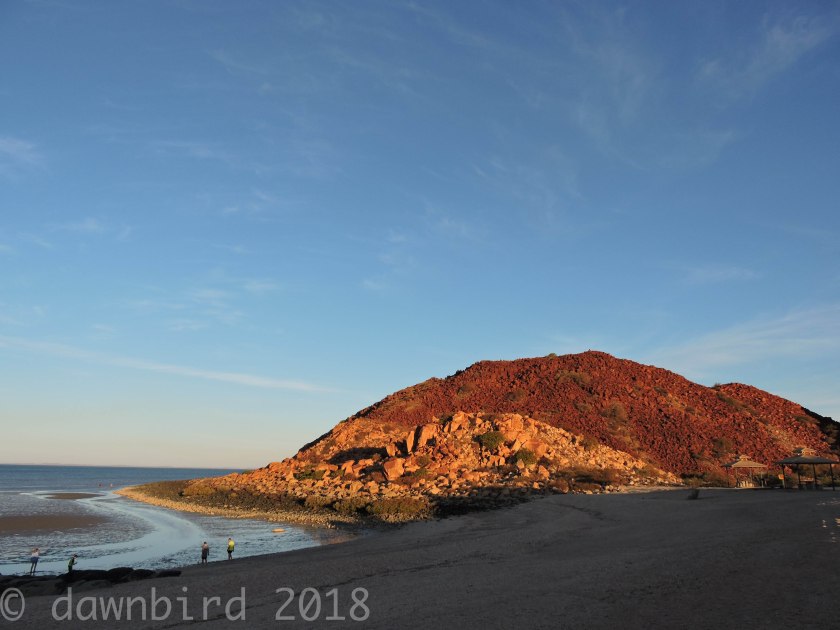 Wait long enough, tide and time will make rocks crumble.
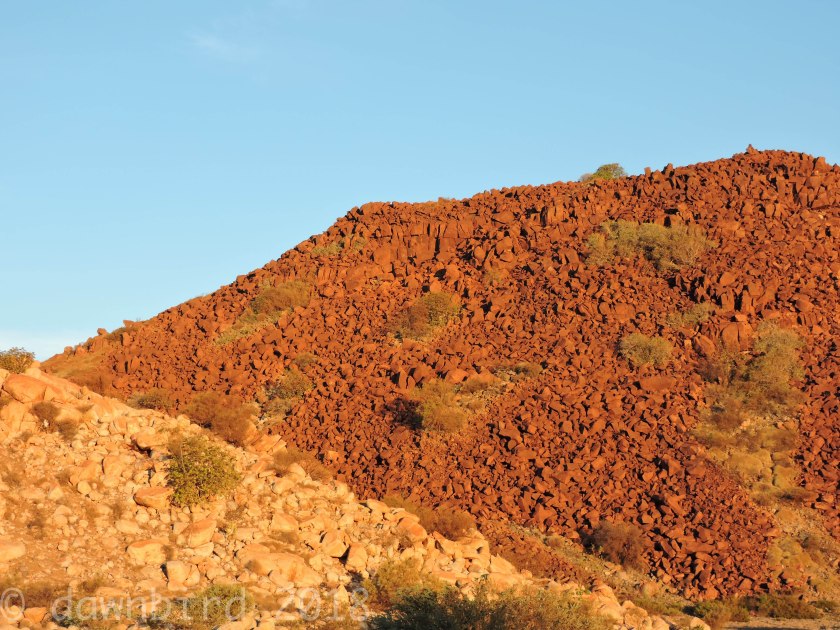 When exploited, the earth bleeds red.
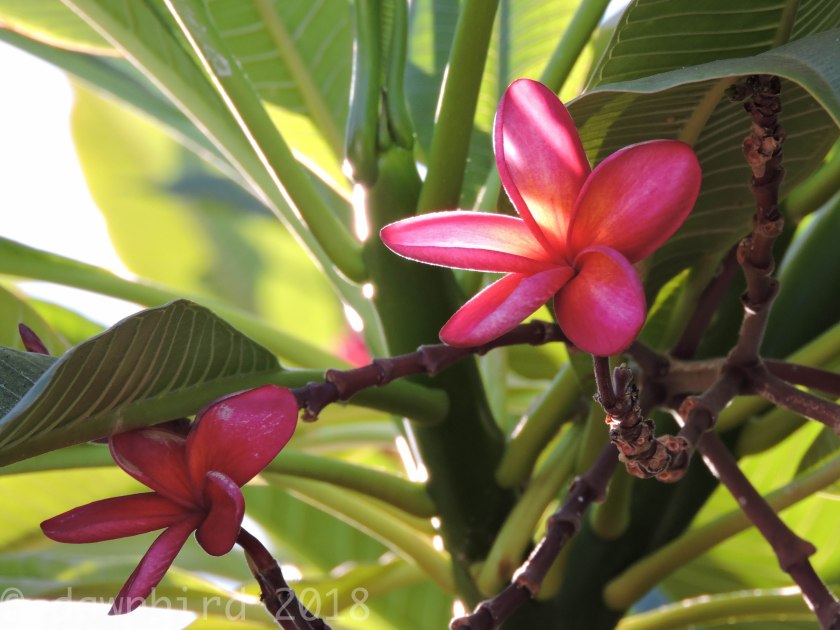 In the harsh Pilbara mining region, if you look hard enough, there is an oasis outside the door.
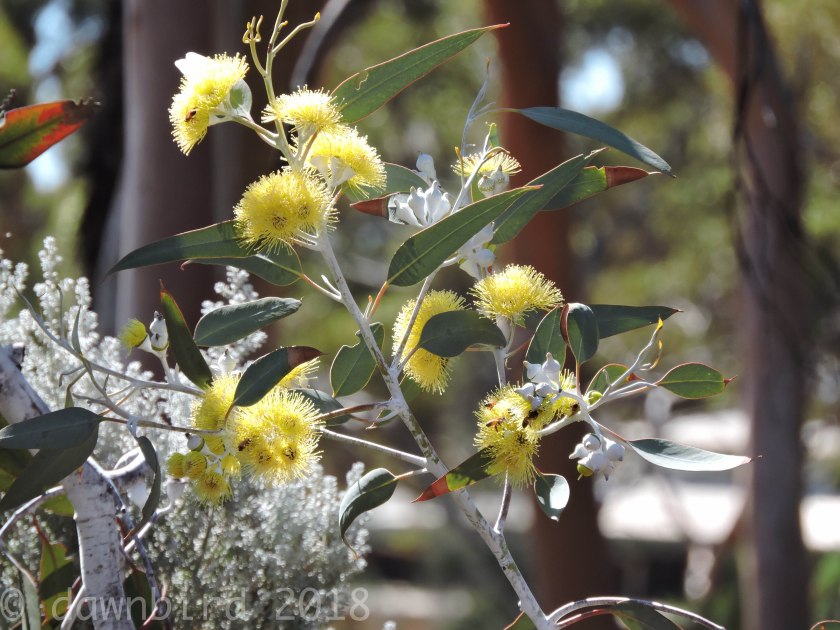 And in the red dust of the Goldfields, nuggets are found in the scrub.
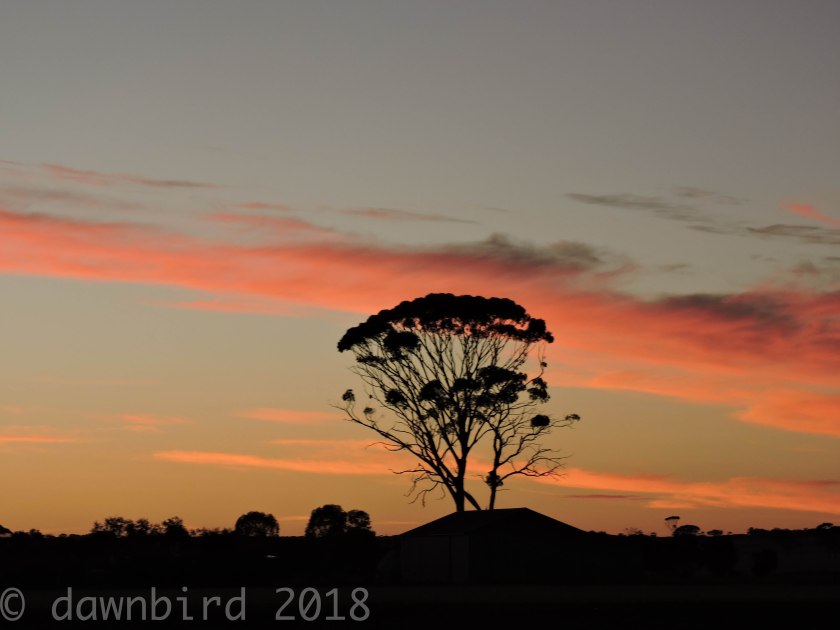 A Wheatbelt sunset is more beautiful, when a solitary silhouette gives it perspective.
 Wake early enough, the party has started with a festoon of pink galahs on gum trees.
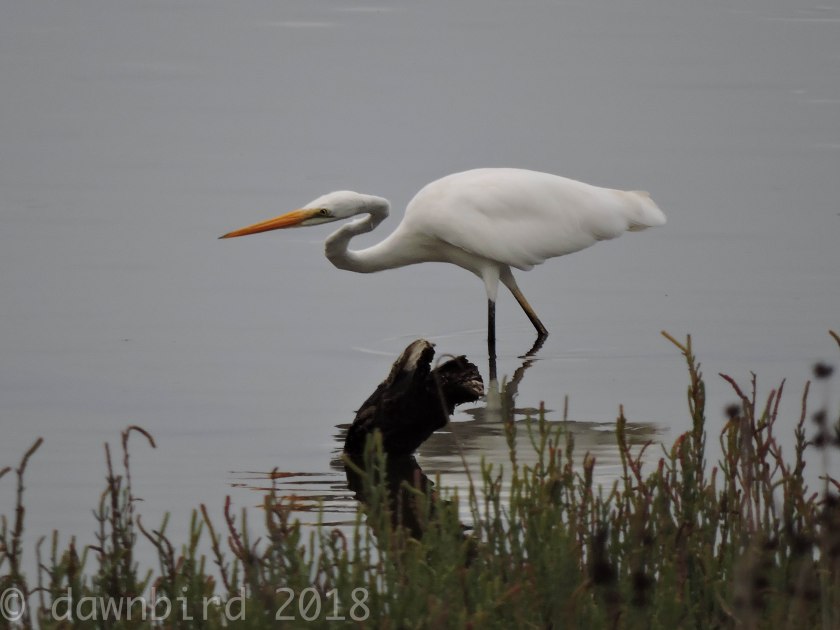 In the Midwest, the white heron is always poised.
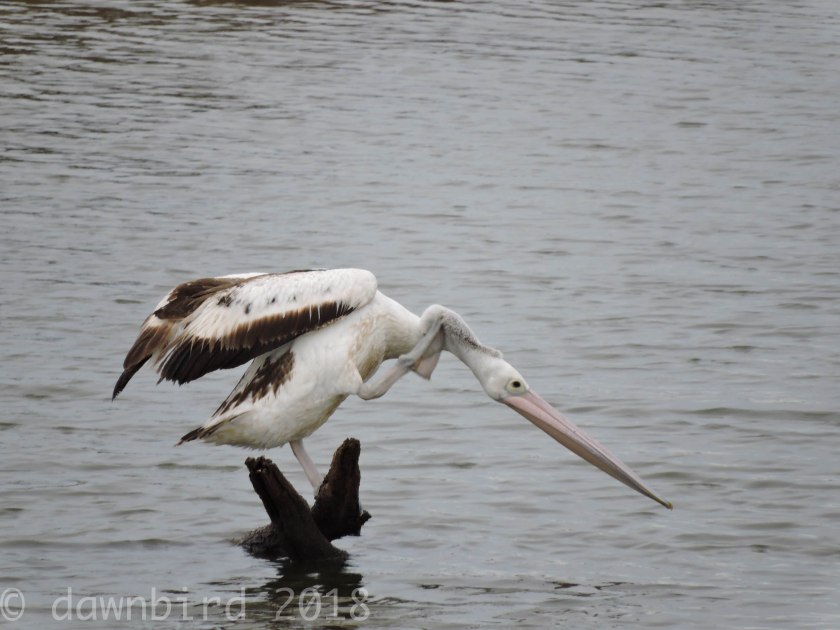 But the pelican can have an inelegant moment or three.
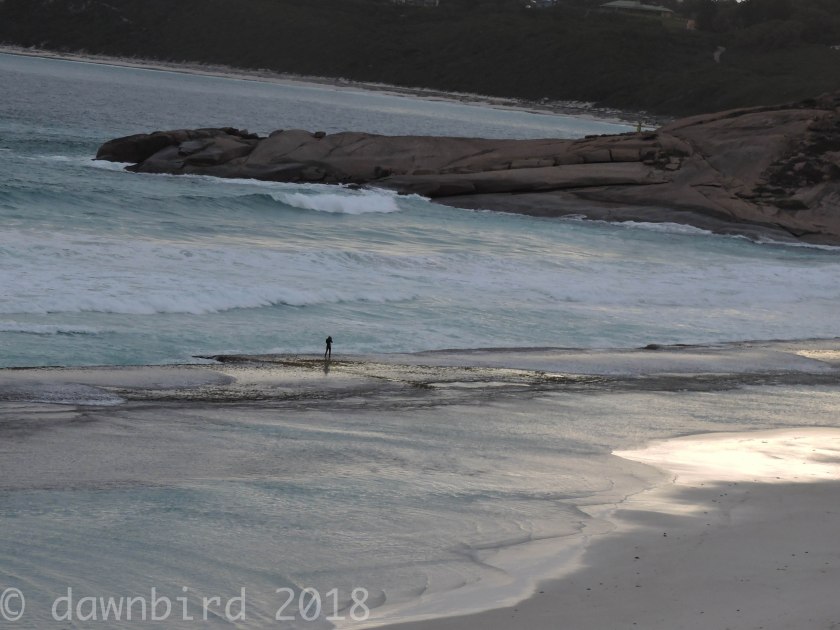 In Esperance, the solitary seek the sea, as friend.
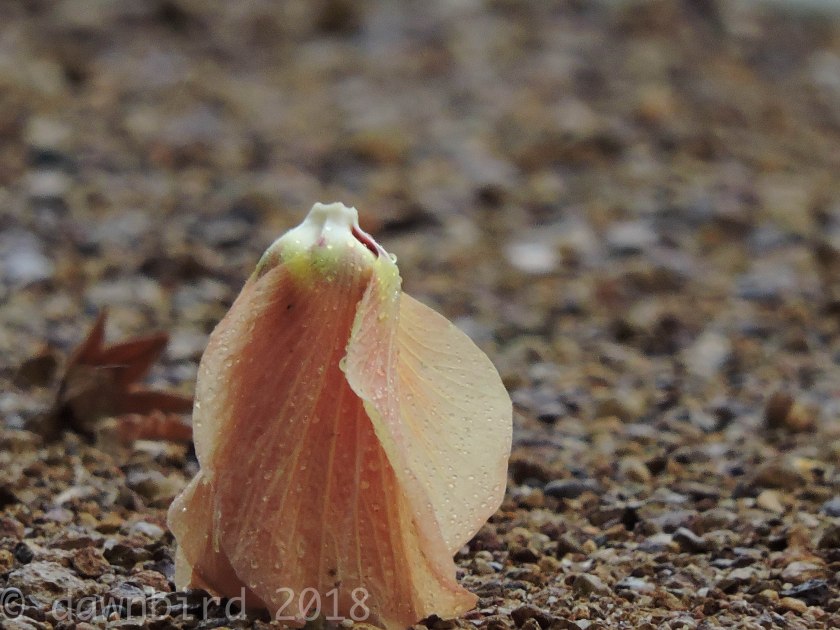 Once past prime, a flower is still beautiful, when it hits the pavement.
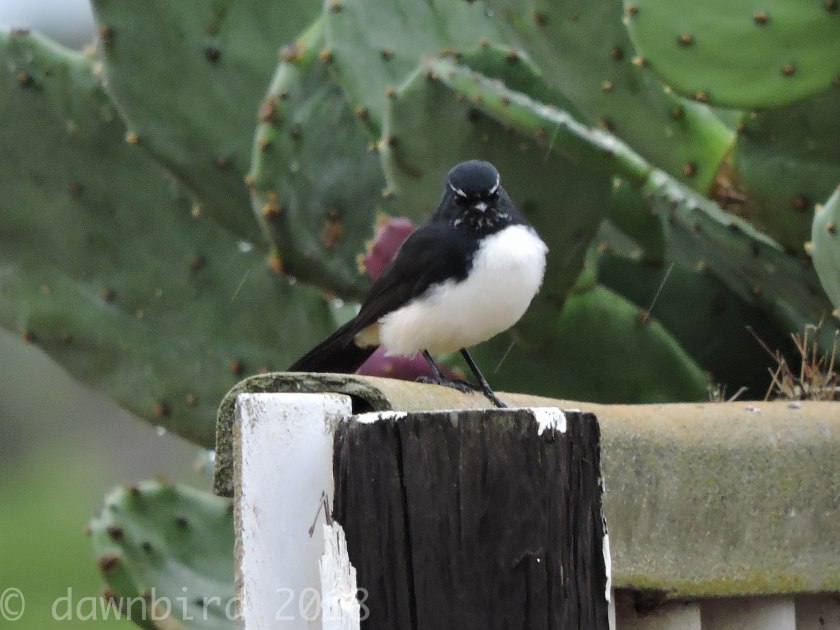 When admonishment is necessary, the Willie Wagtail is never far away.
 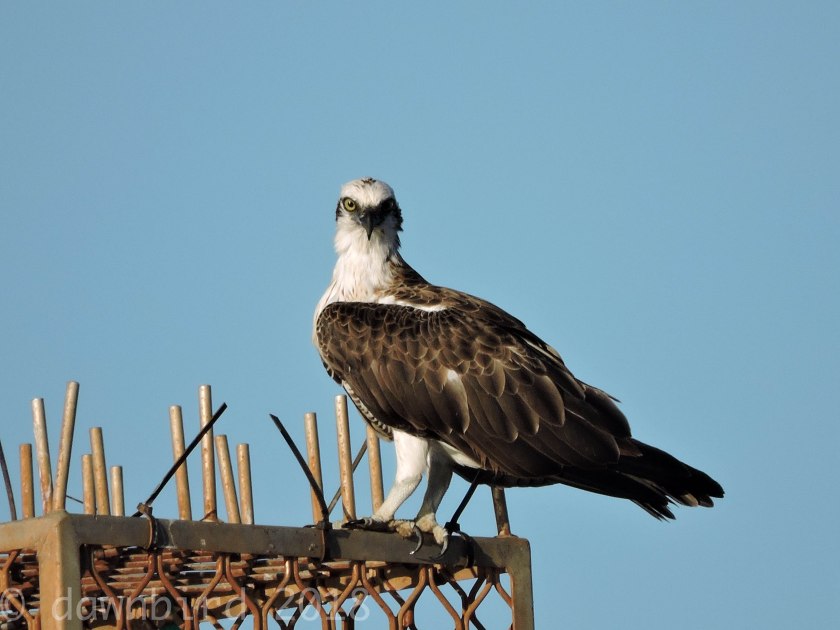 If one’s lucky, the sea eagle may look you straight in the eye.
 A Shared Space
You must be logged in to post a comment.